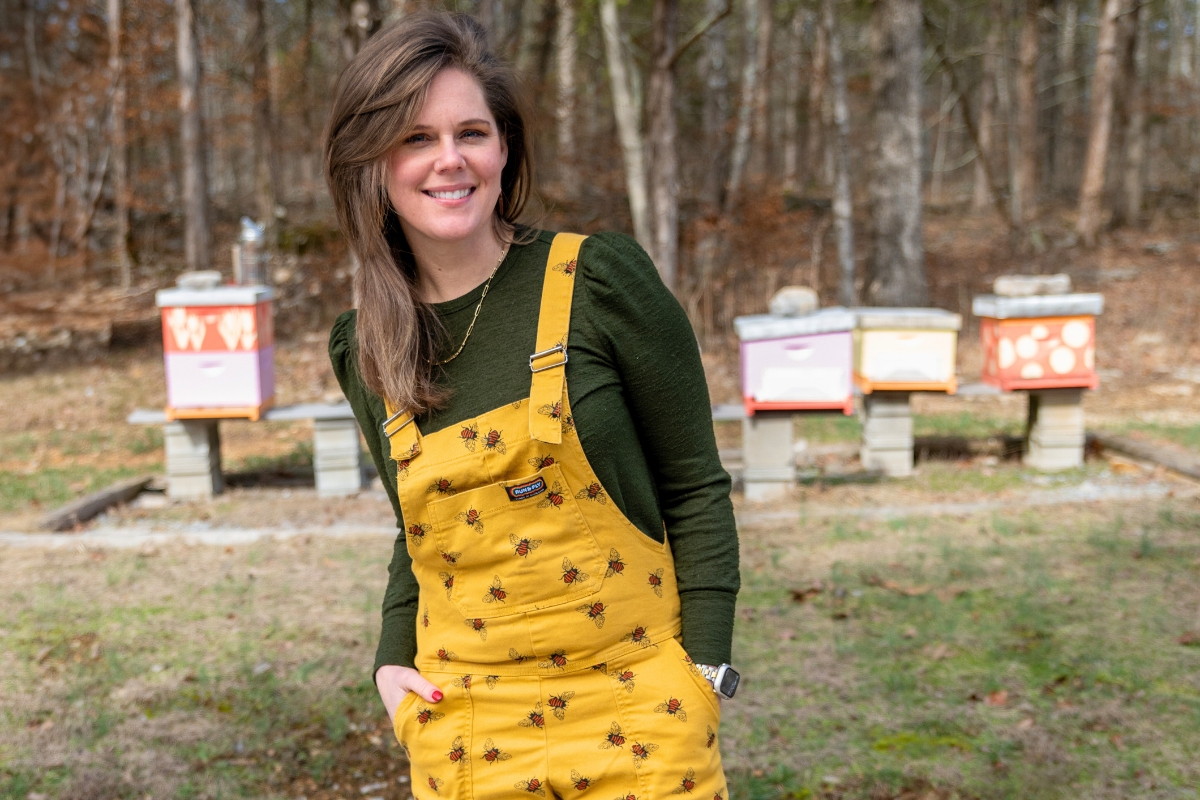
FOUNDED IN 2017, Honeybee Tennessee is a 501(c)(3) nonprofit with a simple but ambitious mission: to educate and support individuals and organizations across the state who want to learn about honeybees. Through classroom visits, mentorship, and community partnerships, the organization helps people understand how deeply these small creatures shape the food we eat — and how much our ecosystems depend on them.
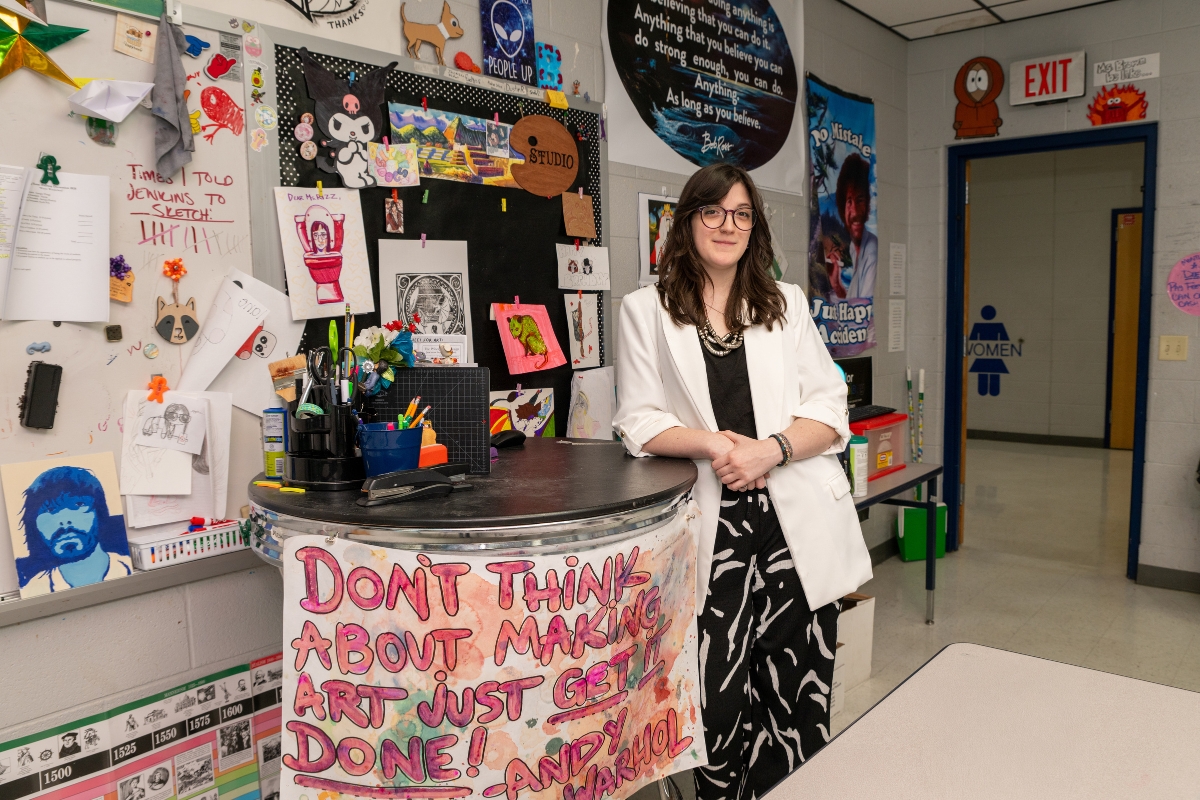
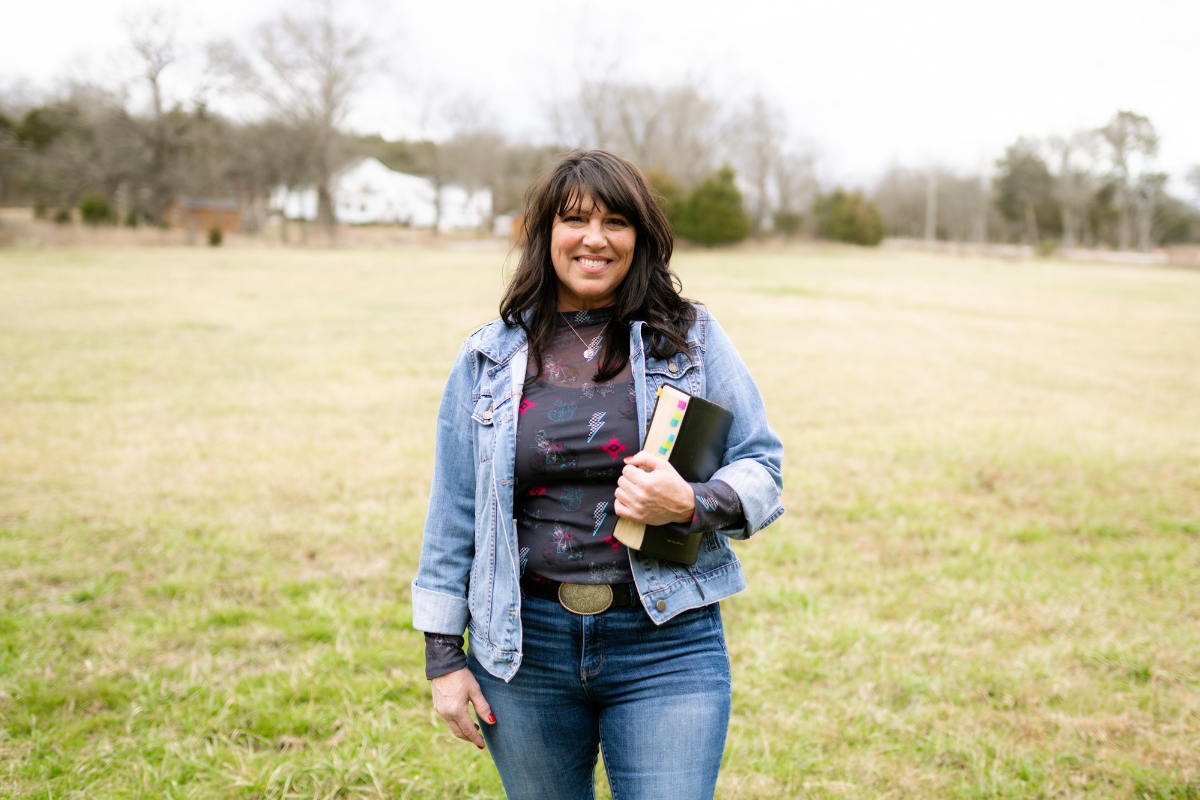
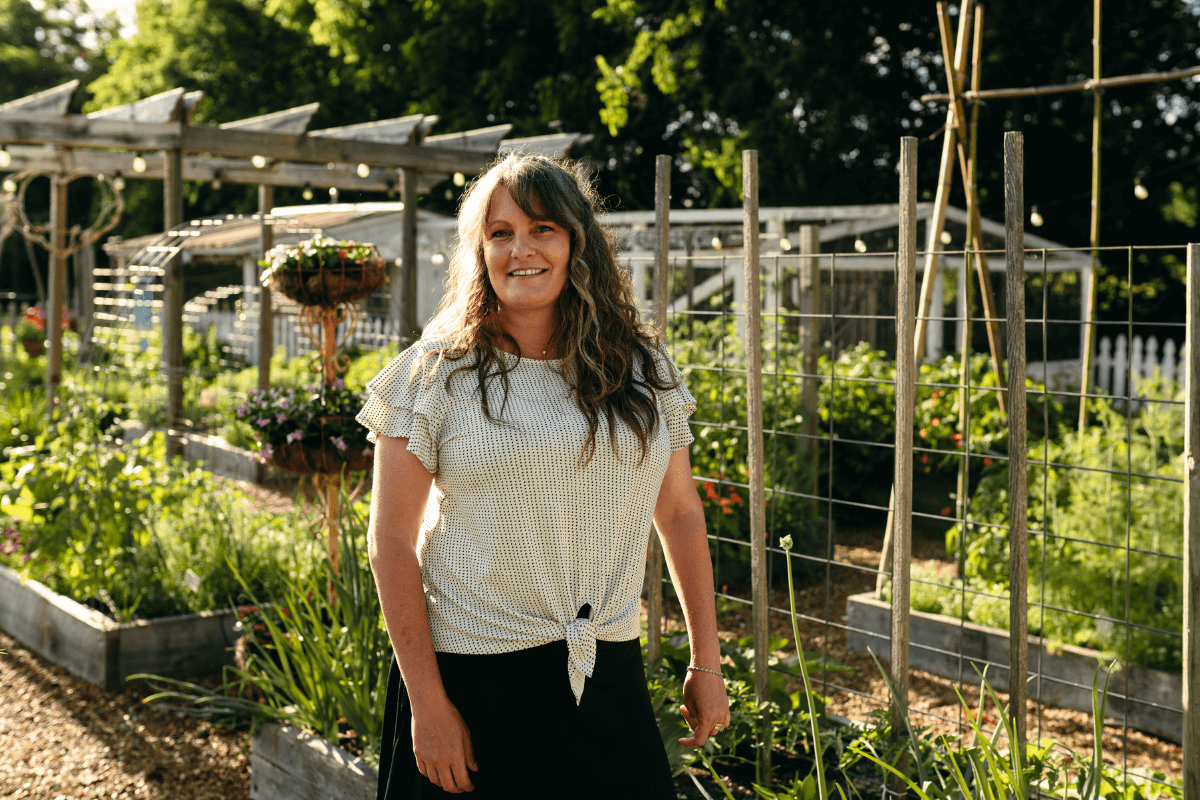
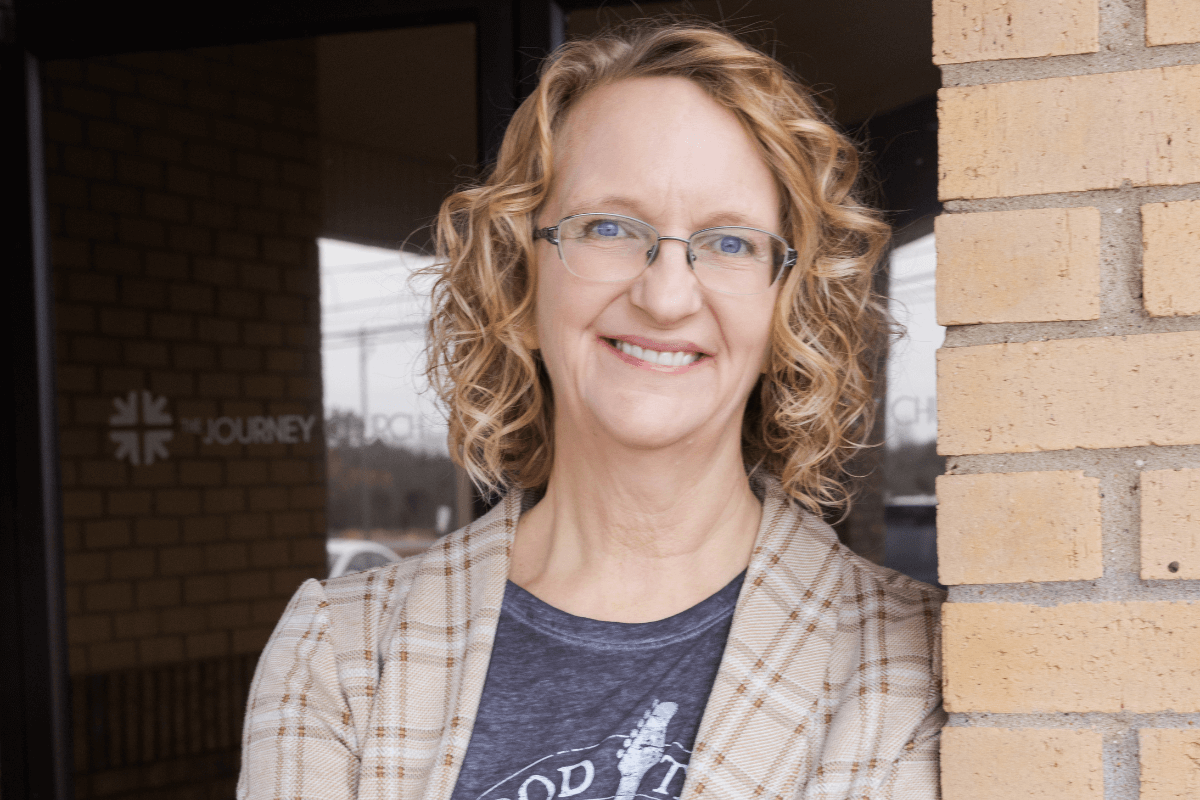
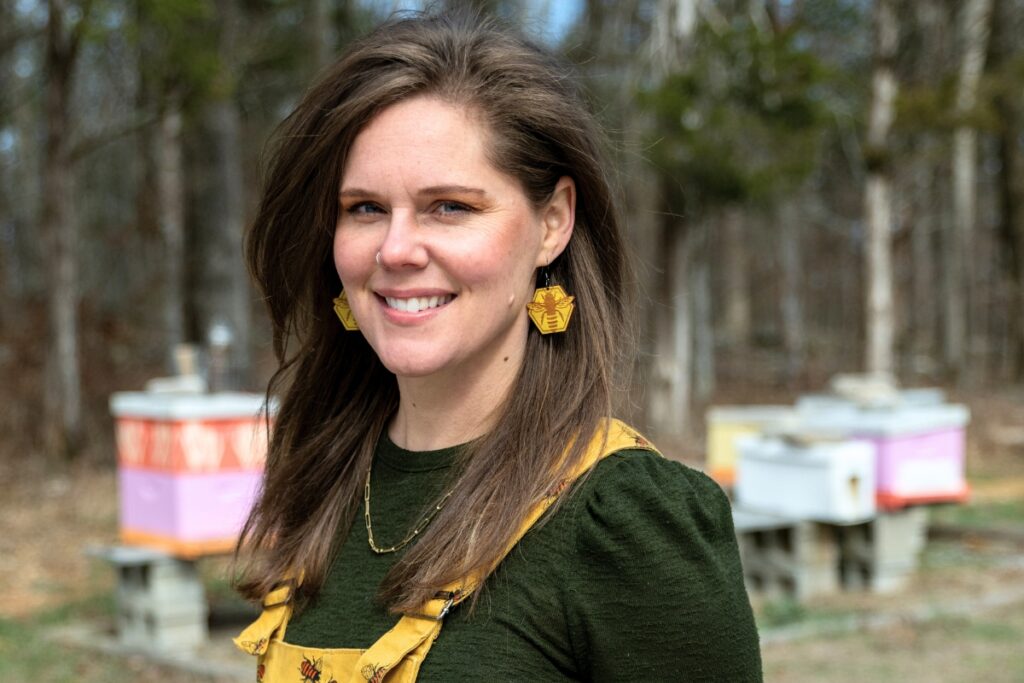
At the center of that work is founder and Executive Director Jessica Davis, whose approach to education is equal parts science, humor, and lived experience. She mentors learners of all ages, visiting classrooms from pre-kindergarten through high school, as well as speaking with civic groups and local clubs. What she brings into those rooms is not just information, but accessibility — the sense that learning about bees is something anyone can do.
First impressions of Jessica tend to land the same way: she is warm, funny, and sharply self-aware. She talks openly about how attention-deficit/hyperactivity disorder made traditional schooling challenging for her, and how, as a child, the classroom rarely felt like a space where she thrived. As an adult, though, she has discovered the power of learning driven by personal passion. Bees, for her, unlocked a form of curiosity that felt active, purposeful, and rooted in the real world.
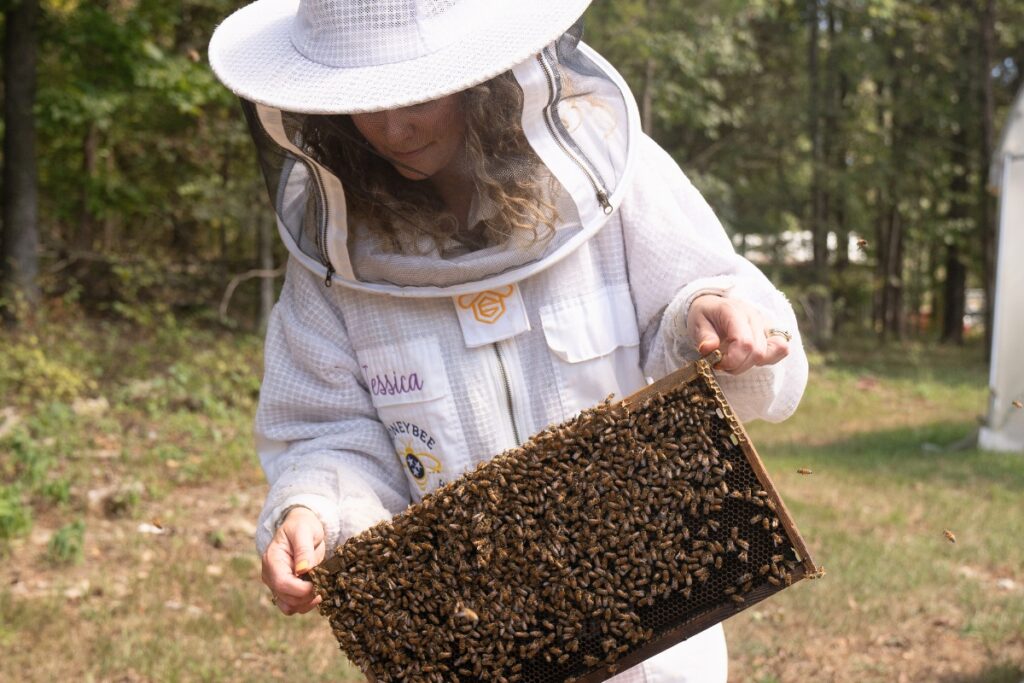
Jessica believes people learn best when they are engaged in work that feels tangible — when they can see and touch the outcome of their efforts. Beekeeping offers exactly that. Honey production, hive care, seasonal preparation, and observation become forms of hands-on science that connect students and community members not only to biology, but to the systems that sustain everyday life.
The inspiration for Honeybee Tennessee — like many turning-point moments — arrived unexpectedly. While driving one afternoon, Jessica noticed a specialty license plate benefiting a wildlife nonprofit. The concept stuck with her: if a plate could support wild turkeys, then surely there could be something similar for bees. That seed of an idea eventually grew into the organization she leads today, rooted in education and stewardship.
Jessica emphasizes that bees are responsible for an enormous share of the crops that make up our diets. Without them, the foods we take for granted would be fewer, blander, and far less diverse. The work of pollinators is quiet and constant, unfolding largely out of sight — and Honeybee Tennessee exists, in part, to make that vital labor visible.
The organization’s work has expanded into research partnerships as well. Jessica is collaborating with a university to study the DNA of honey, examining why honeys from spring, summer, and fall differ in color and flavor. Early findings suggest something remarkable: even hives located close to one another can display distinct pollen preferences, producing highly individualized honey profiles. No two hives behave quite the same.
One of the most striking parts of Jessica’s story is her relationship to the bees themselves. She is allergic — a fact that complicates the work in ways most people would never expect. In the beginning, a single sting meant significant swelling and hospital visits for steroid treatment. Over time, her body has adapted, and now stings are more of a nuisance than an emergency. The irony feels almost symbolic: the very creatures that challenge her physically are the same ones that shape her calling.
Jessica also supports bee education through hands-on school programs, including work with hives at Lebanon High School. There, students can fully suit up and participate in hive care, help uncap honey in the classroom, and assist with bottling. The experience places them at the intersection of science, agriculture, and environmental stewardship — a perspective few students encounter in a traditional classroom.
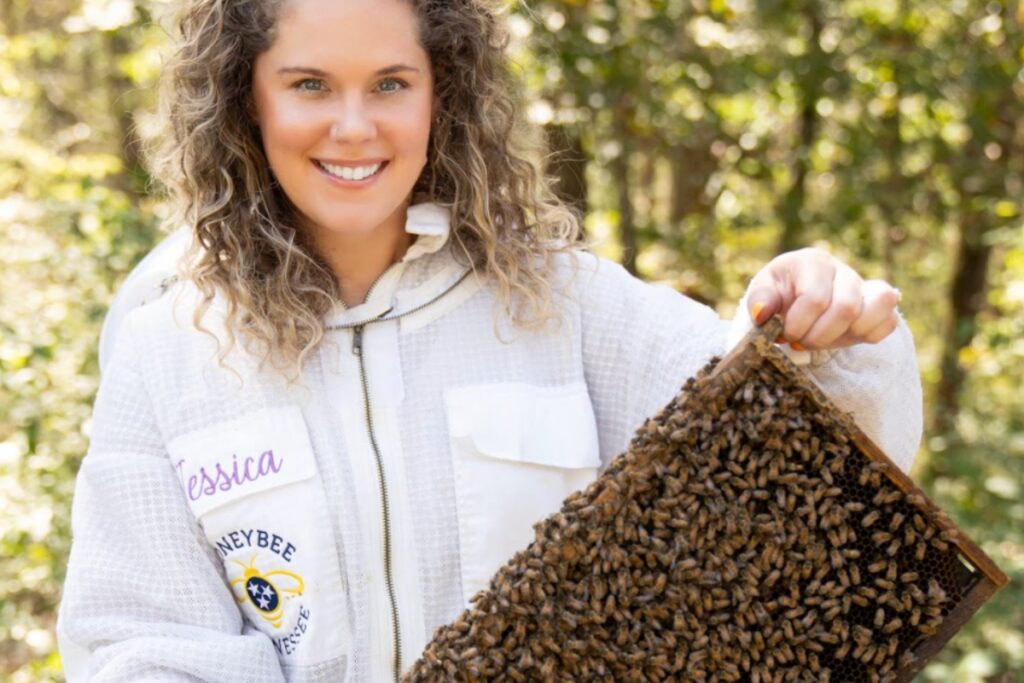
Beekeeping, as Jessica teaches it, is deeply seasonal work. The needs of a hive shift constantly depending on temperature and climate conditions. During cold snaps, she ensures the bees receive supplemental nutritional support, sometimes through sugar syrup. Friends in colder regions, such as Wisconsin and Michigan, wrap their hives to create wind barriers and reduce heat loss.
Inside the hive, winter becomes a lesson in collective resilience. The bees cluster closely around their queen, maintaining an internal temperature near 97 degrees through proximity and motion. In the height of summer, however, the strategy reverses — bees fan the queen to cool her, and some gather outside the hive to reduce heat and density within. Every season reveals a new adaptation, a new expression of shared survival.
The work of Honeybee Tennessee is grounded in that same spirit — resourceful, collaborative, and future-minded. Through education, research partnerships, and mentoring, Jessica Davis helps Tennesseans see honeybees not only as insects, but as partners in the ecosystems that sustain us.
Her story is one of curiosity turned into community impact, of learning rediscovered outside the walls of a traditional classroom, and of finding purpose in the small, steady work of care. GN