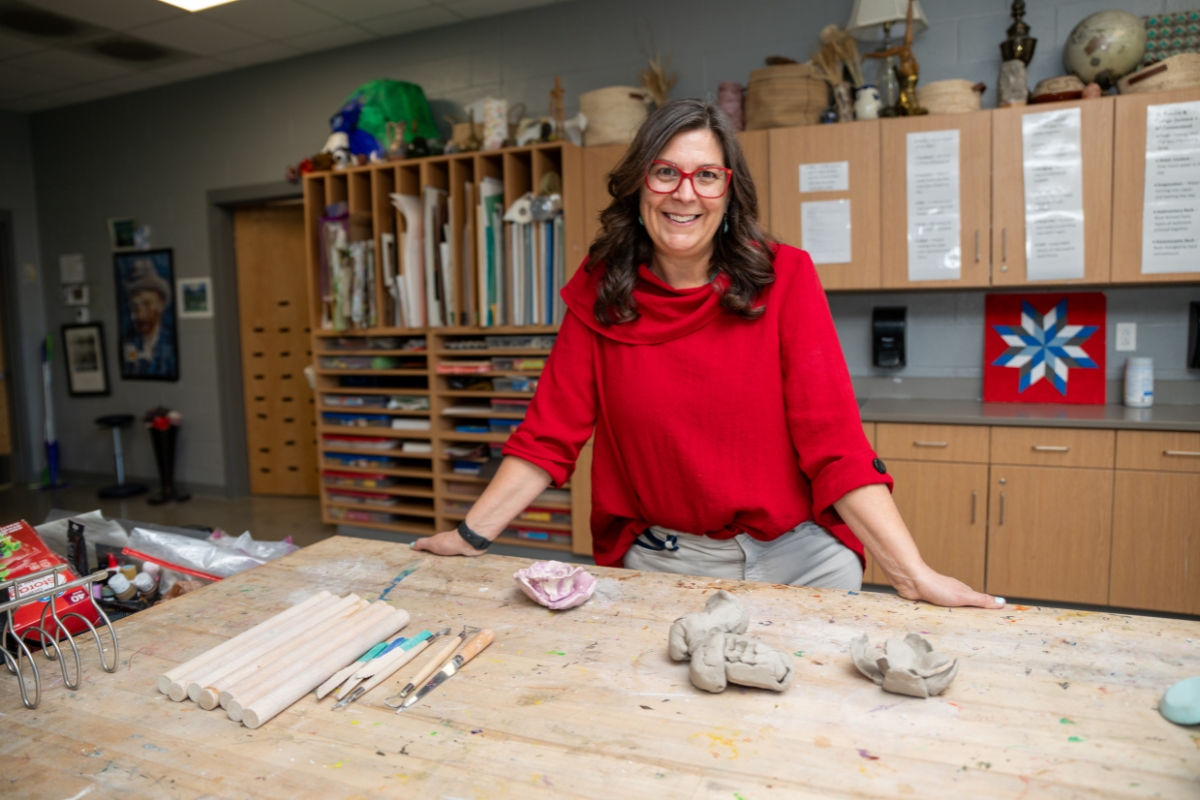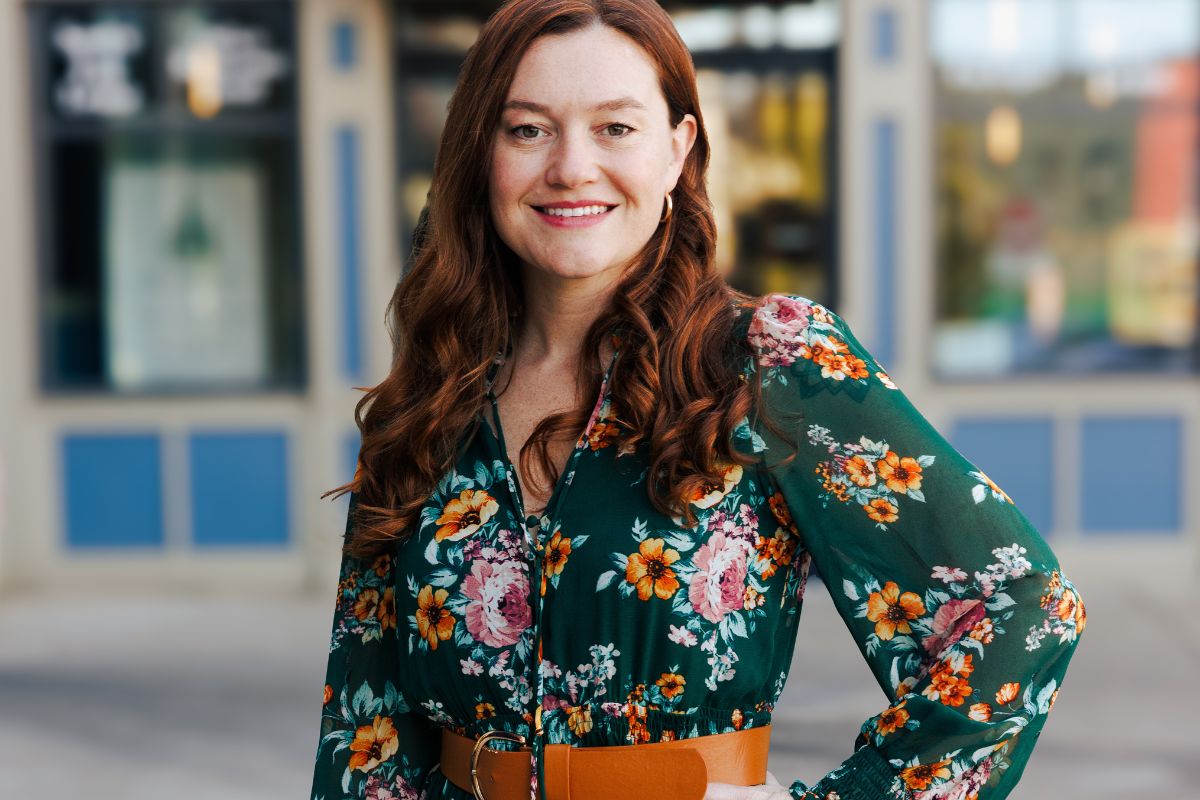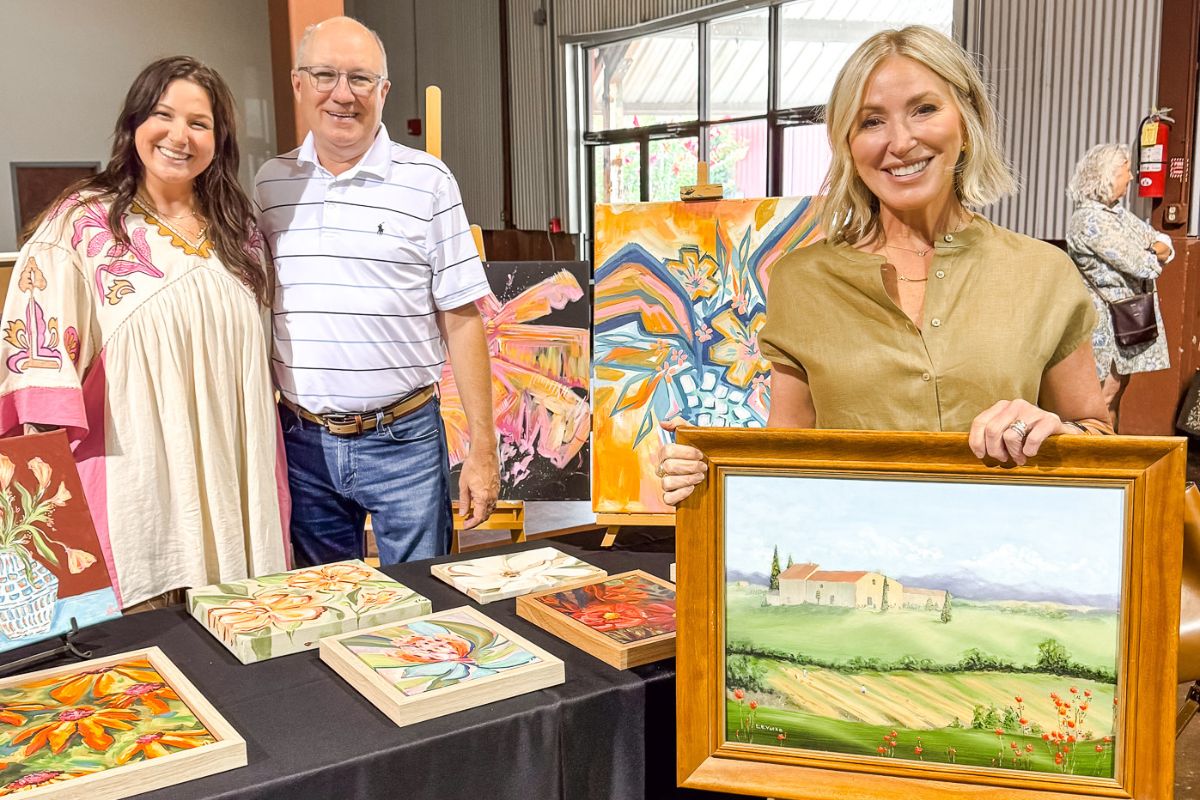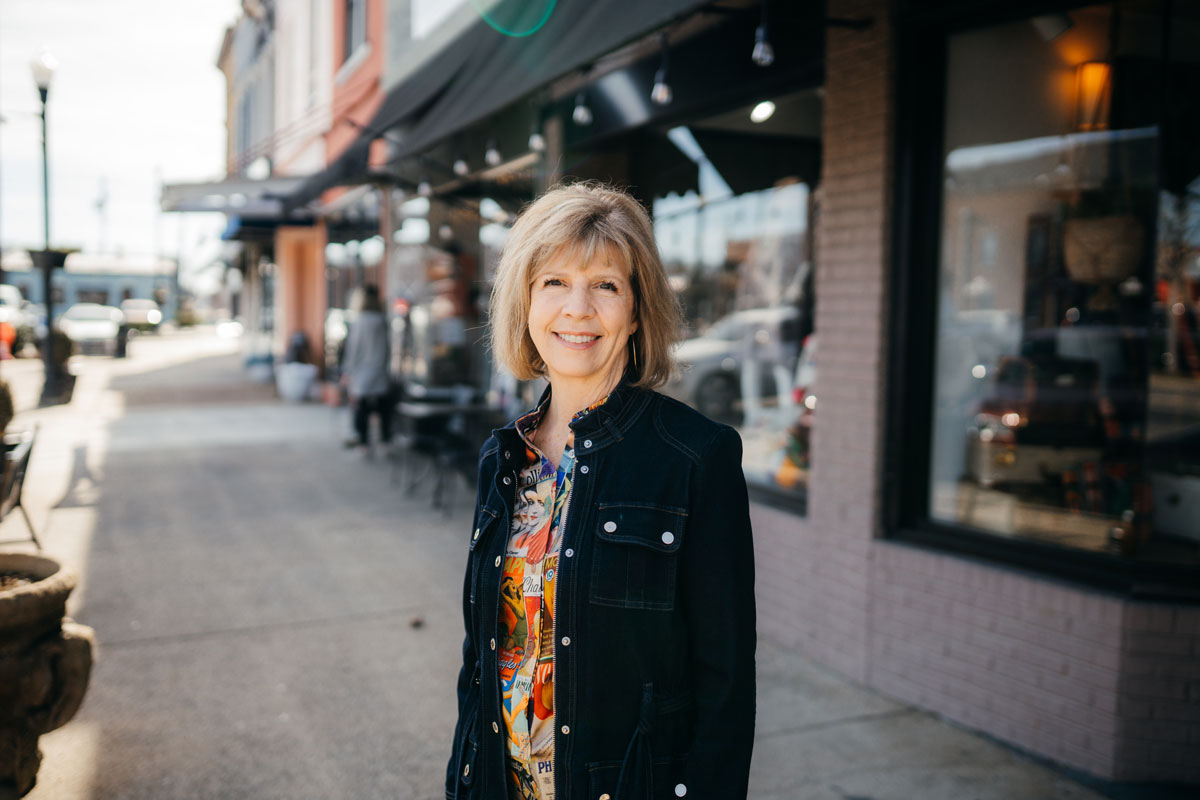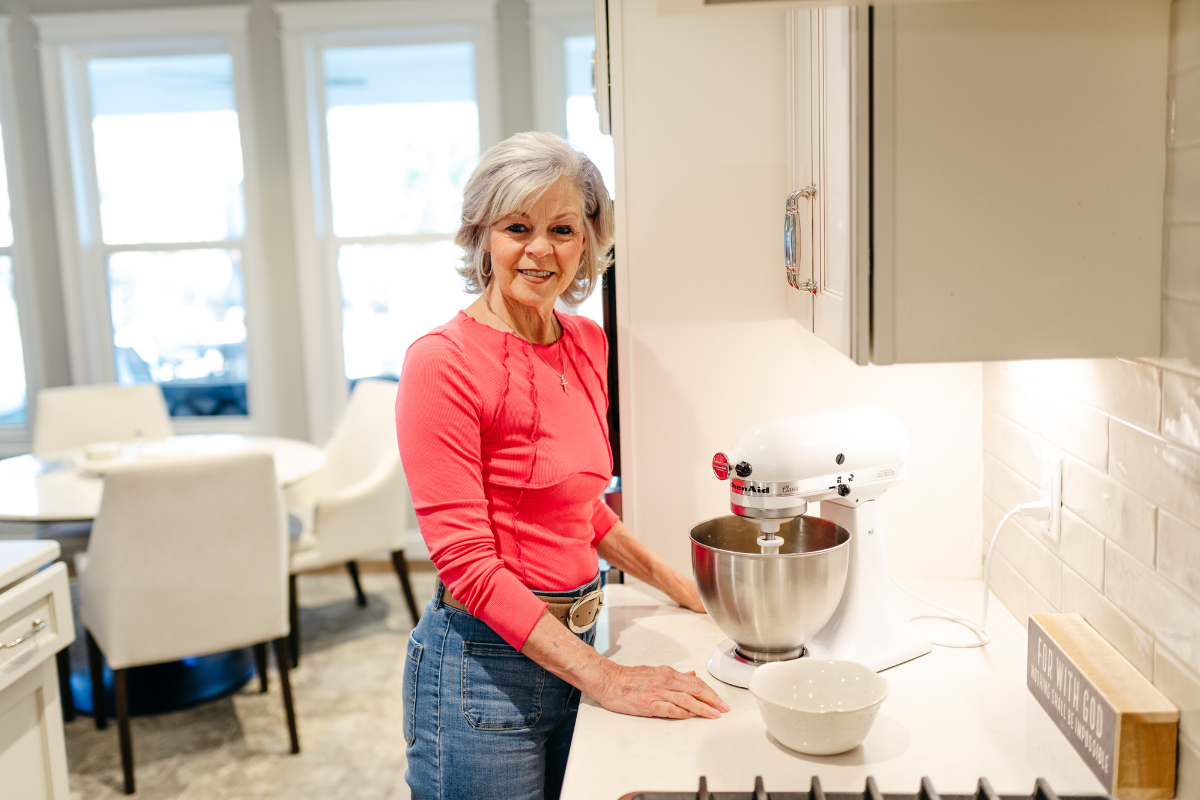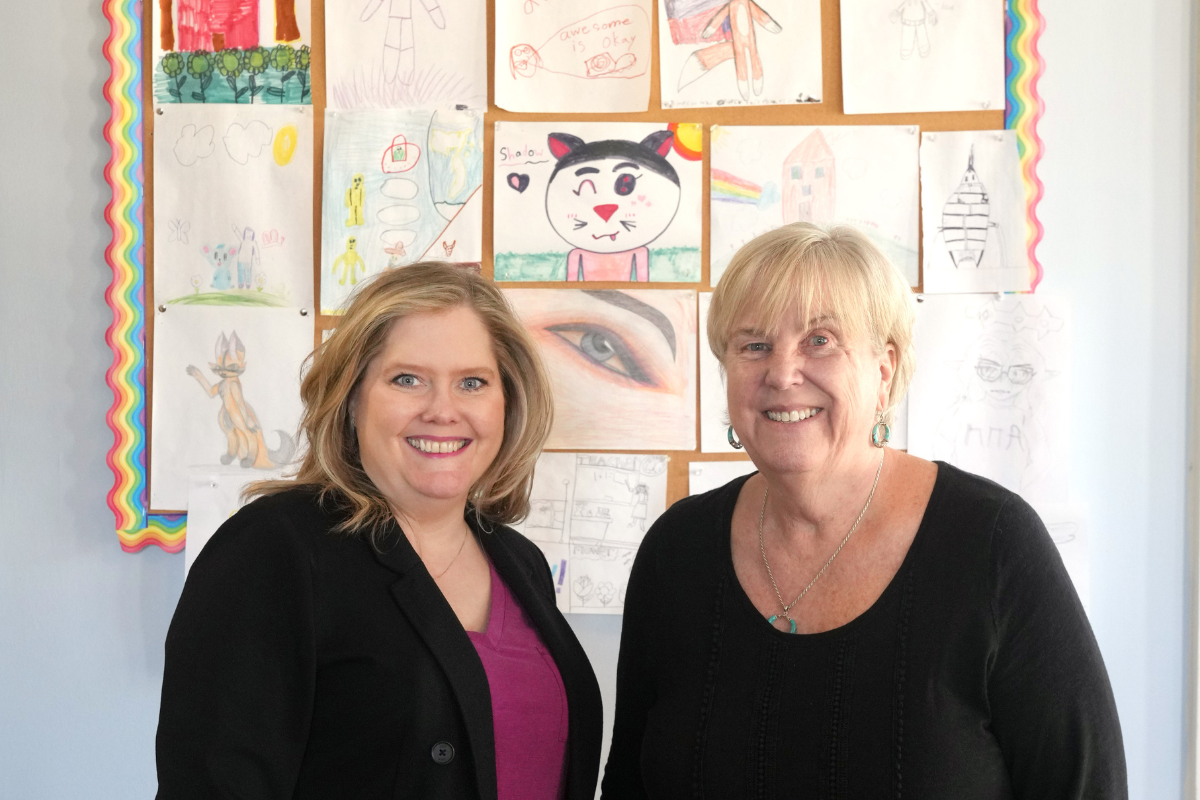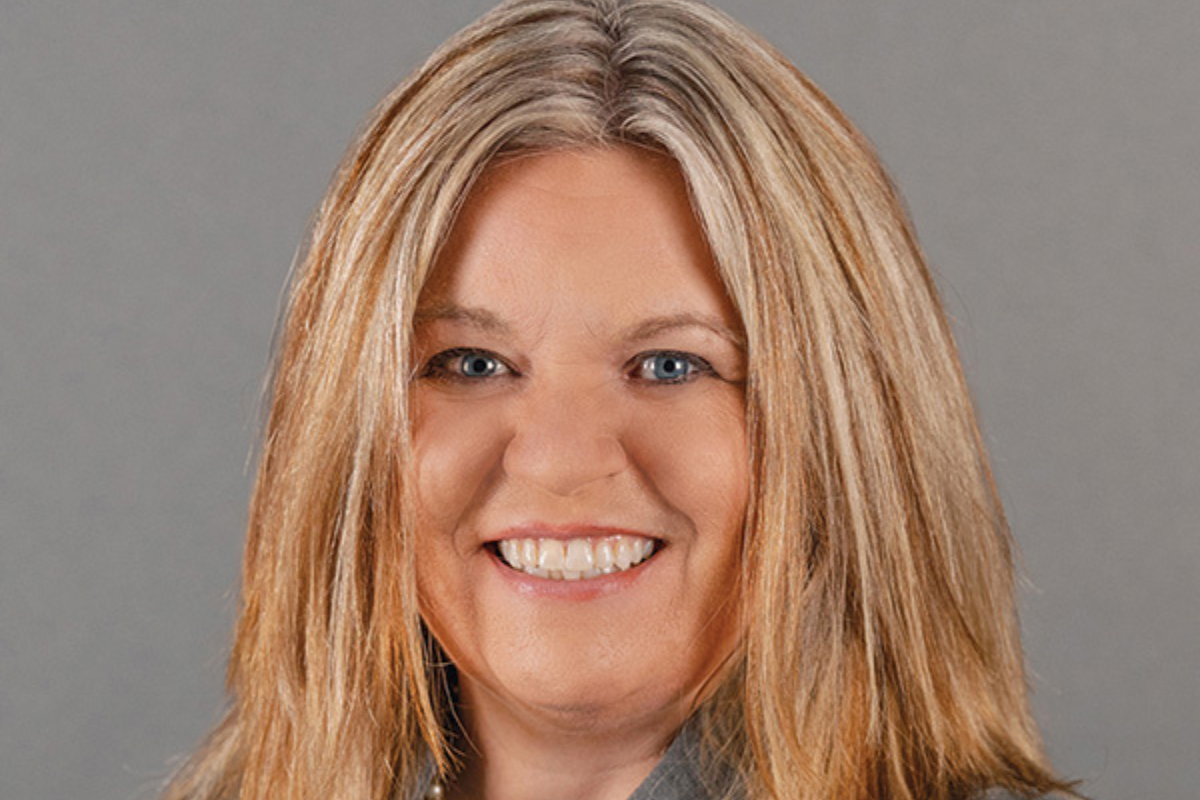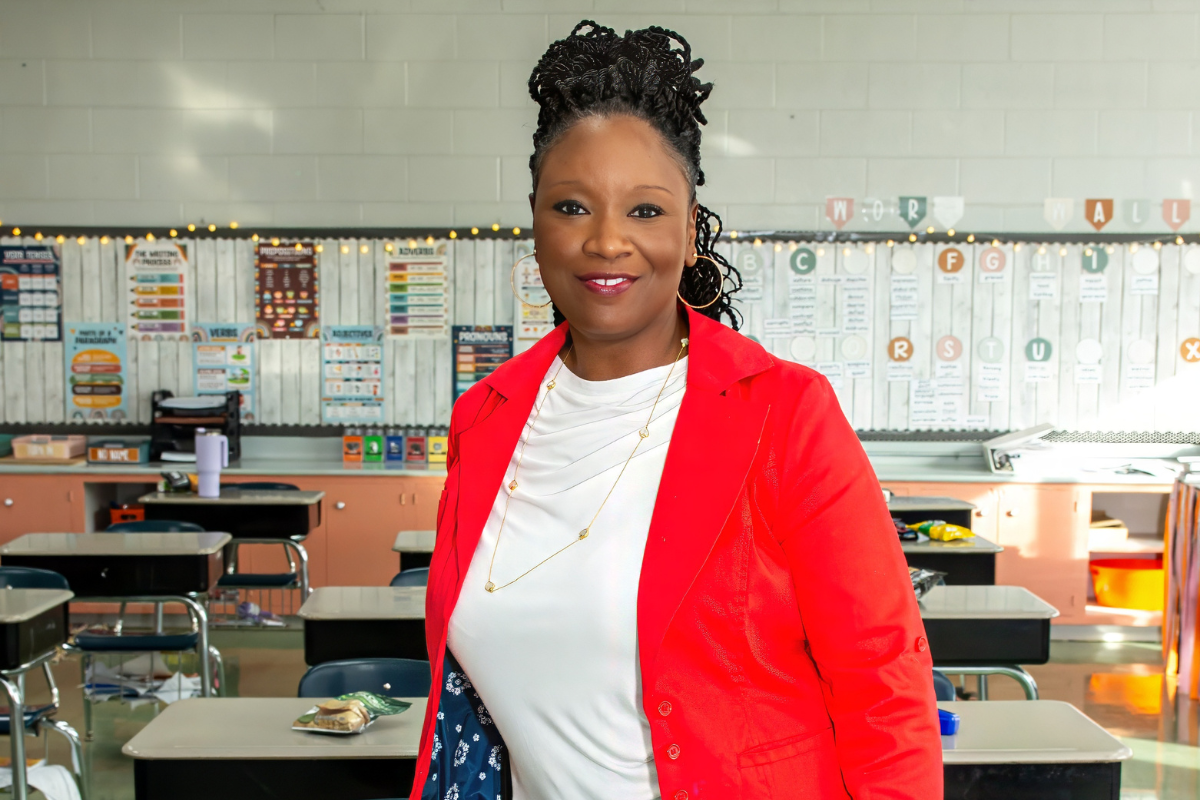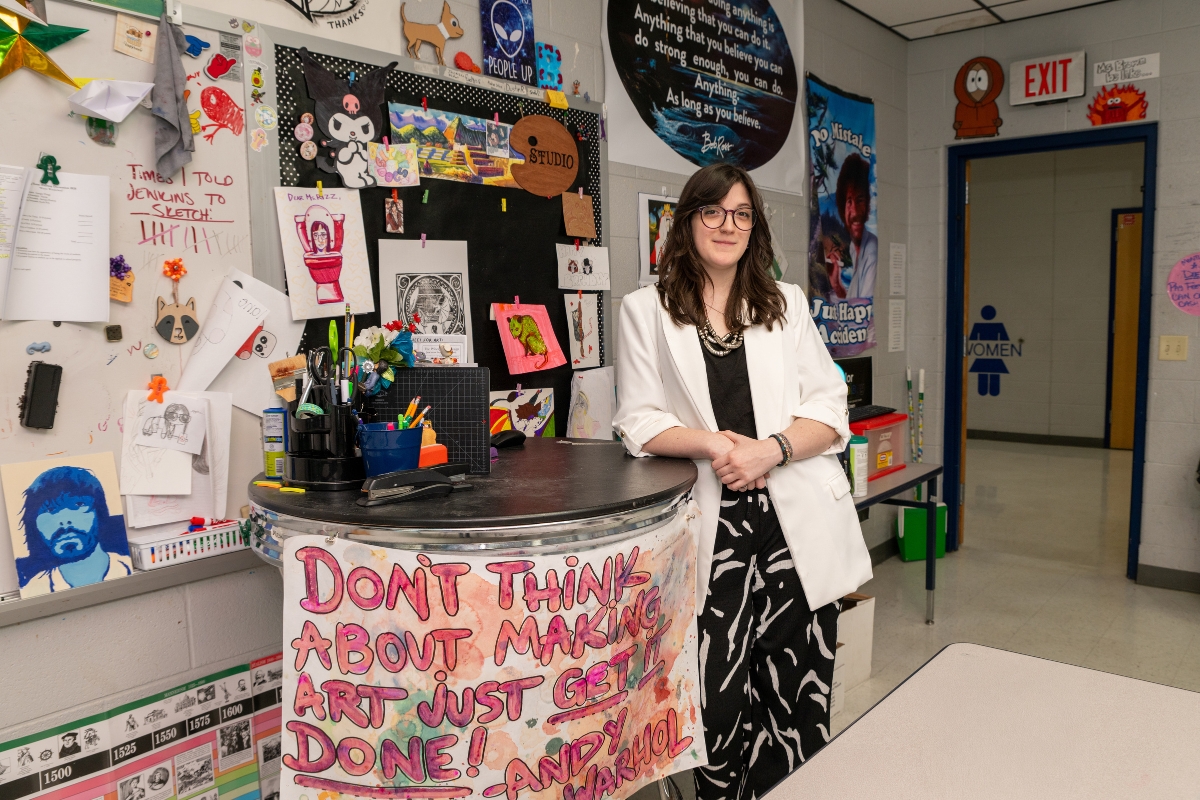
FOR ART teacher Leslie Brown, it would seem that her career as an educator was somewhat meant to be. Hailing from a family of educators, Brown might tell you that her path to teaching was not a choice but a birthright. A fourth‑generation educator, she was raised in a lineage where classrooms were as familiar as living rooms and where the smell of sharpened pencils and tempera paint felt like home. While the decision to pursue a path in education wasn’t the initial plan, it has led her to her village and the opportunity to show just how impactful art can be in the classroom.
A MOST BELOVED ART TEACHER
“My biggest hero in the world is my grandmother, and she was an art teacher,” she said.
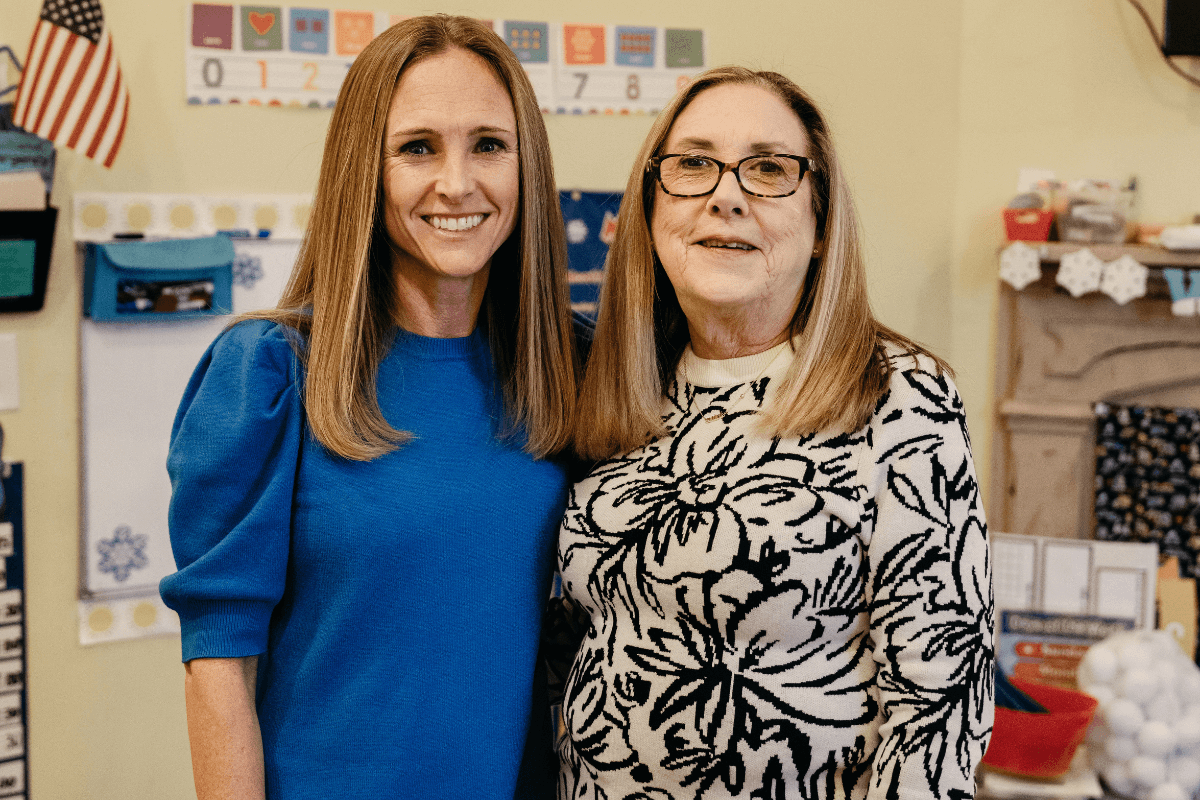
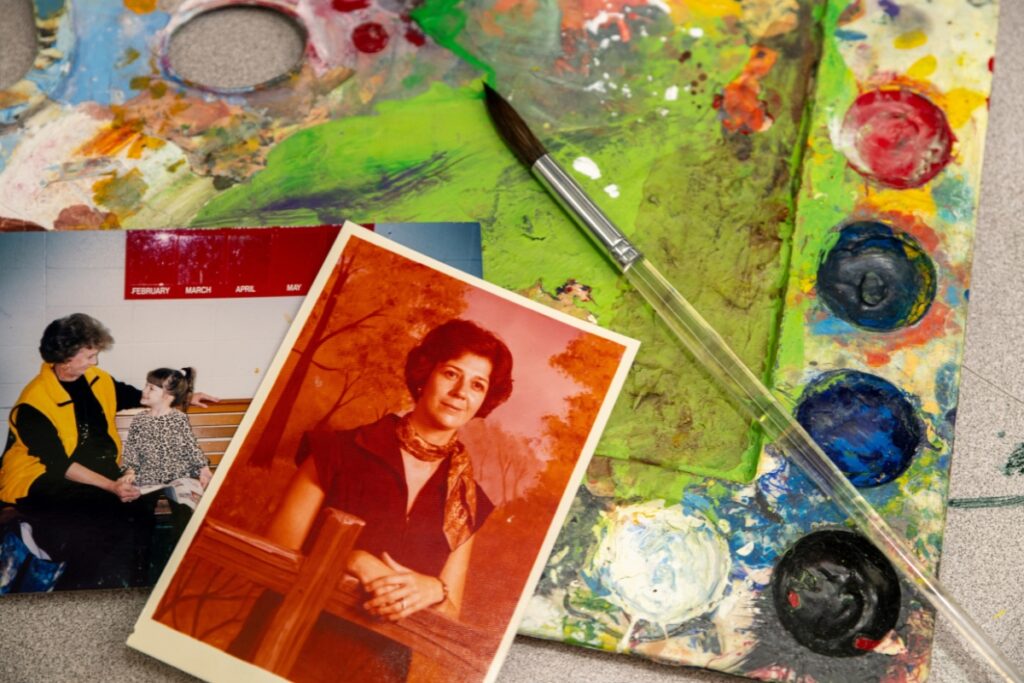
Brown’s grandmother, Peggy Cunningham, is her idol. Cunningham taught kindergarten through twelfth grade in Dickson County for decades, and to Brown, she was more than a mentor. She was the one who cracked open the world of creativity and handed it to her with both palms open.
“When I was little, she would put art supplies in our hands immediately, and we would paint and draw,” Brown explained. “Through her, I fell in love with creating. Art became a second language to communicate how I was feeling. Also, having someone so close to you to teach you creation is one of the most beautiful things you can ever do because she was teaching me how to express myself. She was teaching me how to speak my truth to other people in a way that knows no bounds of language.”
Her grandmother, still alive and well, remains a constant source of inspiration. Brown said that her grandmother didn’t just teach her art — she taught her how to be brave enough to make something from nothing. That gift shaped her long before she realized it.
A CAREER TAKES SHAPE
Her grandmother’s gift was taking shape as Brown navigated what she wanted to do with her life, because teaching wasn’t always the plan.
“Originally, I didn’t want to be a teacher,” she said. “I really wanted to be a doctor. I was kind of thinking that I wanted to either be an occupational therapist or maybe a pediatrician or something like that because I’ve always loved working with children.”
She carried that dream well into college. But the seed of teaching had been planted earlier, even if she didn’t recognize it at the time.
“When I was in high school, one of my high school teachers asked me if I had ever thought about being an art teacher, and I said I had never thought about it,” she said. “A few years down the line, I’m in school to be an occupational therapist, and I look around, and I was just like, ‘I don’t think these are my people. I don’t think I’m in the right space.’ And then I switched my major and ended up going to art education instead.”
Brown said it felt like coming home.
“It was great, because I was able to fall into that little legacy,” she said. “I have educators in my family who have been a huge inspiration to me, and I get to continue that, and that’s really exciting for me.”
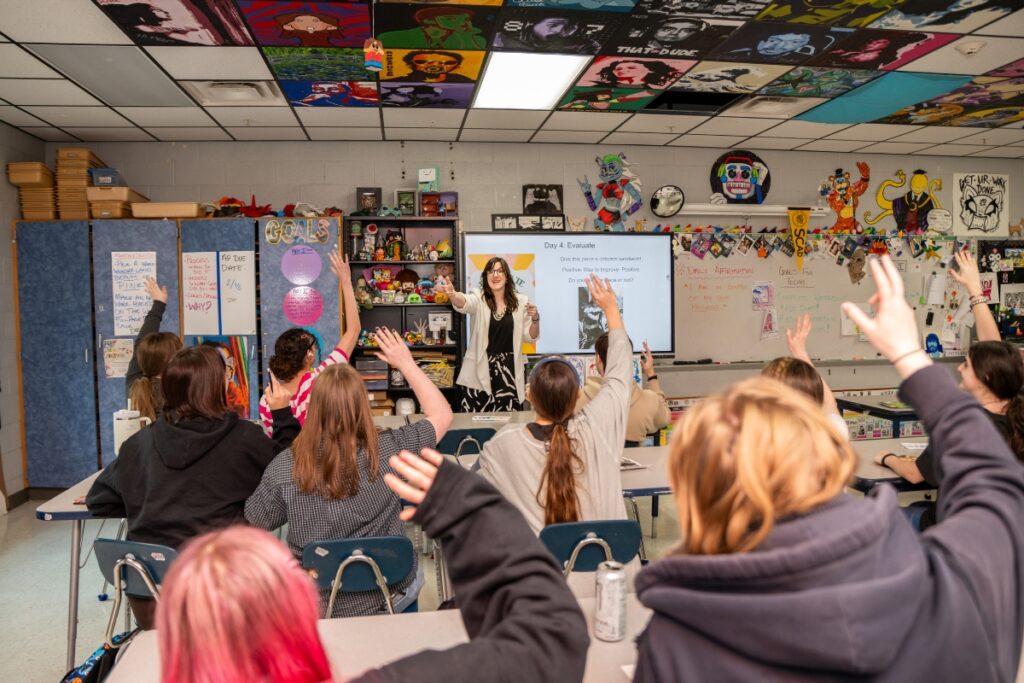
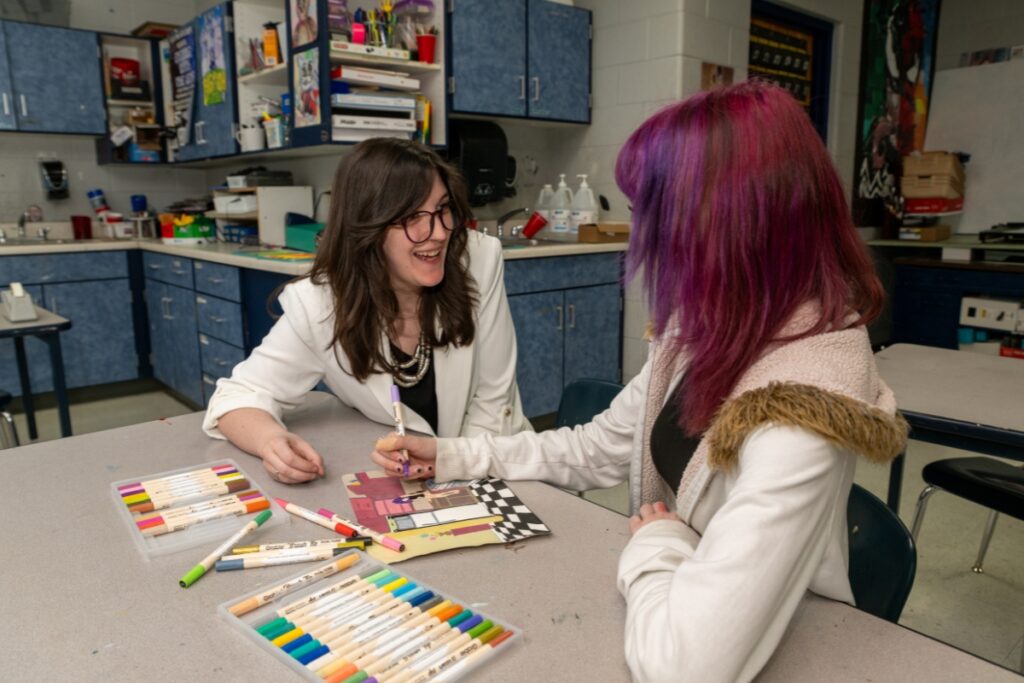
Five years into teaching with Wilson County Schools, Brown has built a classroom that feels less like a room and more like a refuge. She encourages creativity, nourishes talents, and welcomes all into her classroom.
“One of my main goals is to impress upon the children that I’m not here to judge how well they can draw. That’s not what I want to do. I’m trying to teach you where to look and not what to see. I’m trying to get you to engage with the world creatively. And also be able to critique but not condemn. I want to foster a space where artistic curiosity is not only encouraged, but celebrated.”
She believes that practice makes progress — not perfection. To Brown, art is about communication, connection, and courage.
“I think that getting them to talk is really important and having that social emotional creation happening where this doesn’t have to be a perfect art piece, but it does need to communicate something. Giving meaning to the things that you’re doing is really important — in not only art, but in all facets of life,” she added.
SEEING THE BIG PICTURE COME TOGETHER
“One of the most rewarding things that I do in my classrooms is… the very first week of school, I give them what I call a ‘show me what [you’ve] got’ assignment. They can draw or paint whatever they want, and I don’t give them any instructions. I just give them materials and tell them to make something.”
She uses that first piece as a baseline. Then, at the end of the semester, she would ask them to do it again.
“Seeing them look at what they’ve done and be like, ‘Wow, I made something happen here. I did something in this class. I actually got better.’ That is so rewarding.”
Now just five years into her career as an educator, Brown said she hopes to always be a soft place to land for creativity and kindness for her students.
“I hope they leave with the confidence and knowledge that creating doesn’t have to be just drawing,” she said. “Anything that comes from your hands is something that only you can truly do, and there’s power in that. I also hope they remember that kindness and warmth are two of the most important things that you can create. It is so hard to teach those things, but I hope that I can extend as much love and kindness as I can to them and try to help them get through their days and make their days brighter. I hope some of that can rub off on them. They may not remember one point of view, but I hope they will remember to take care of one another.” GN