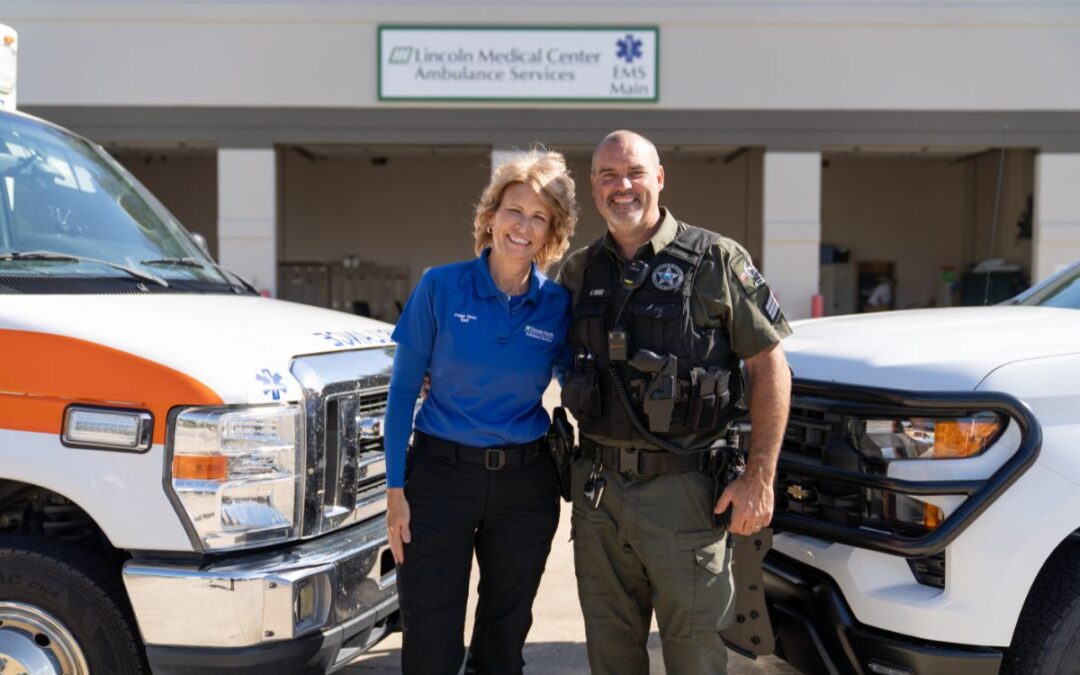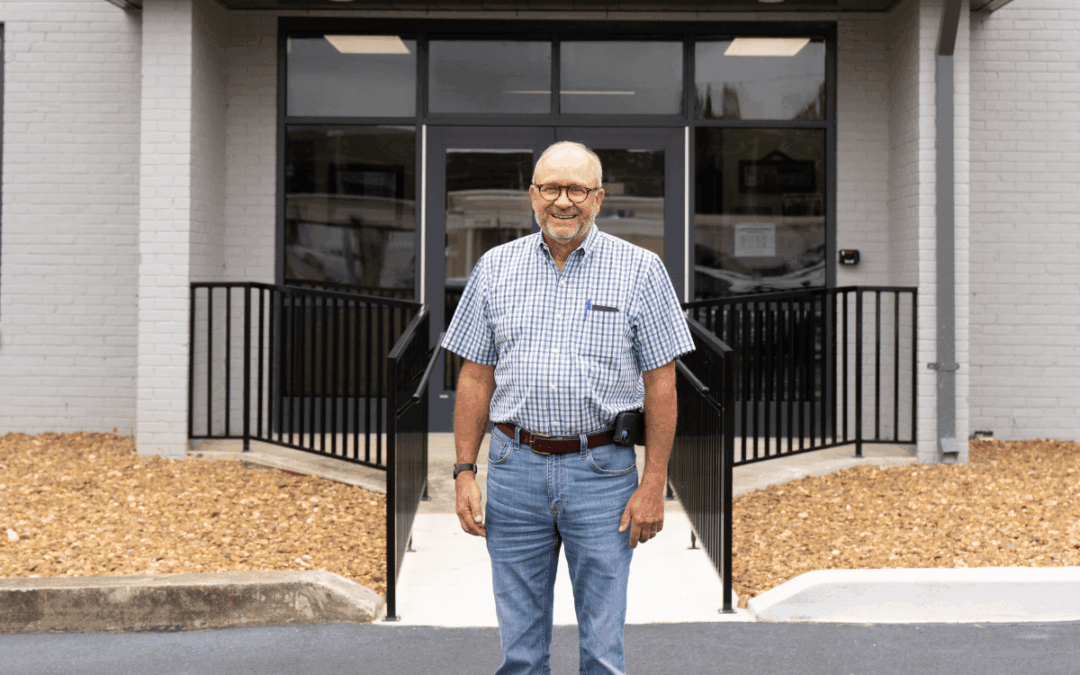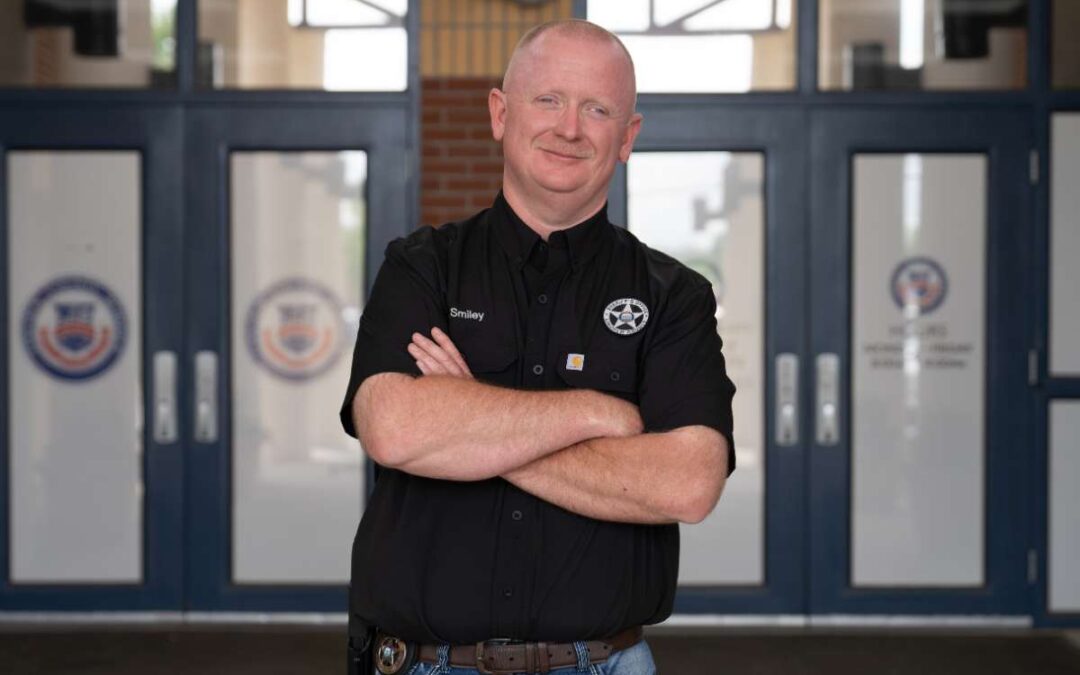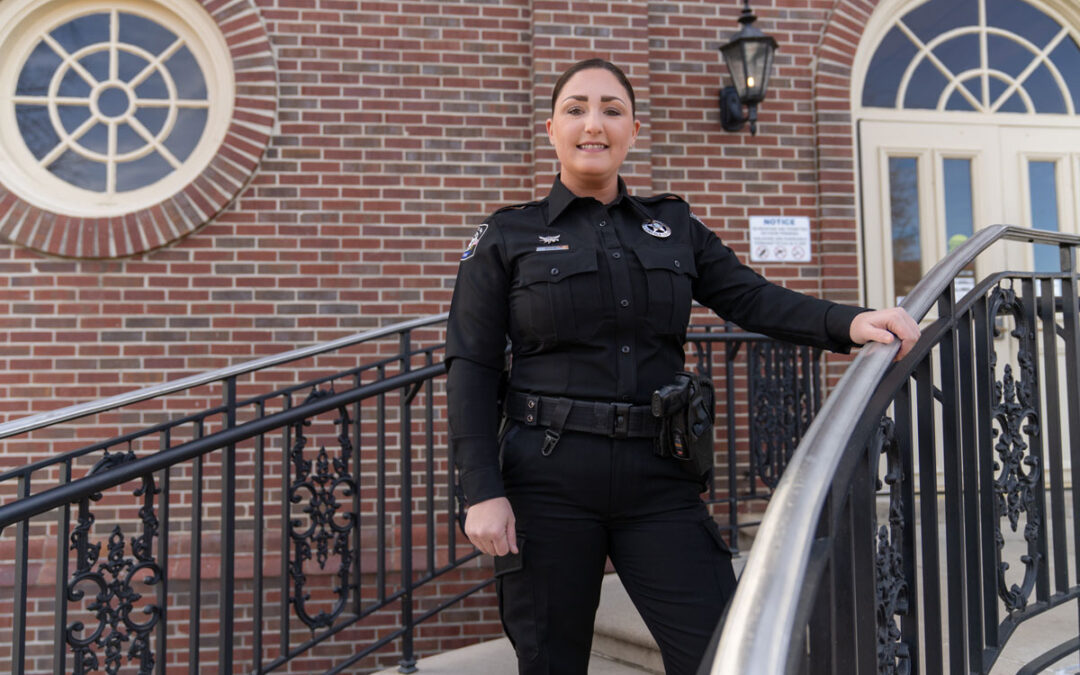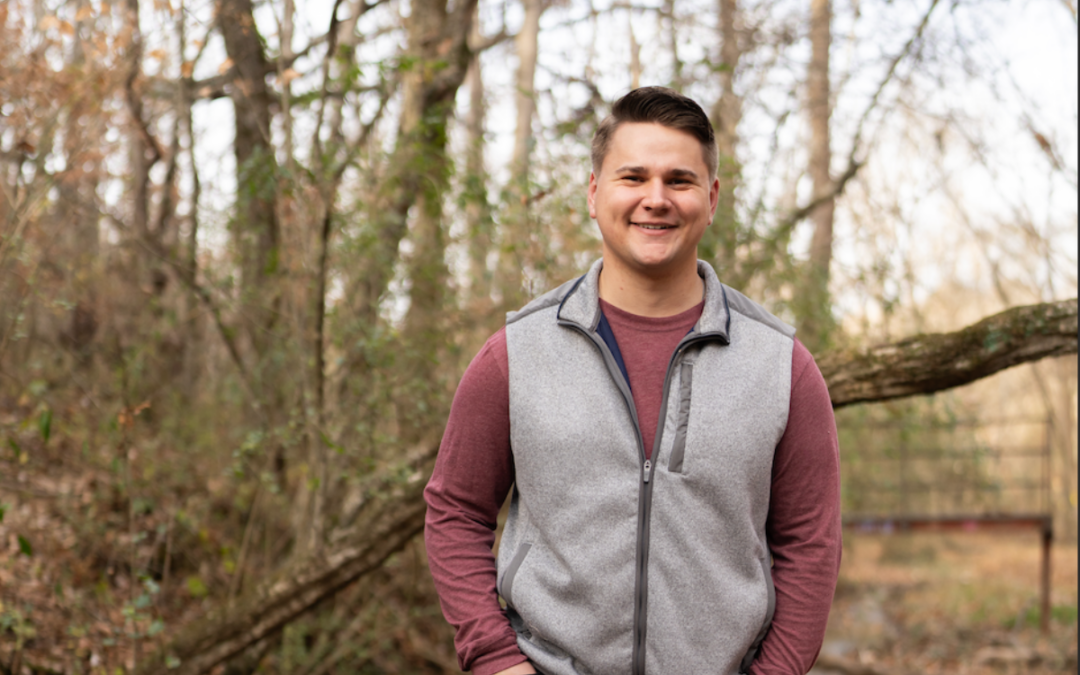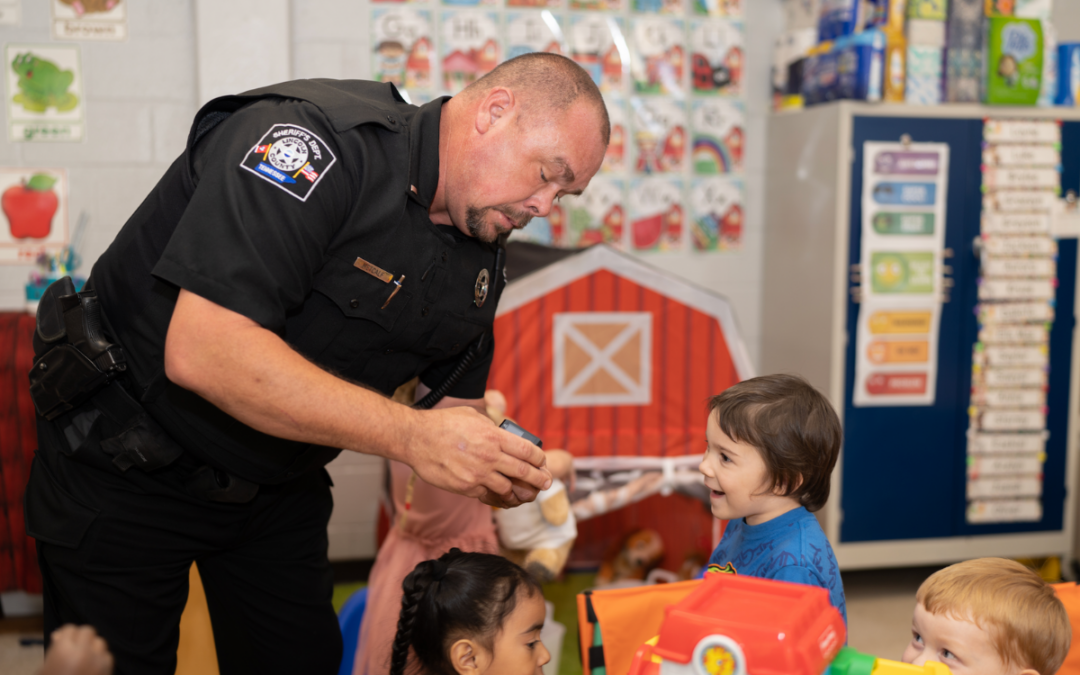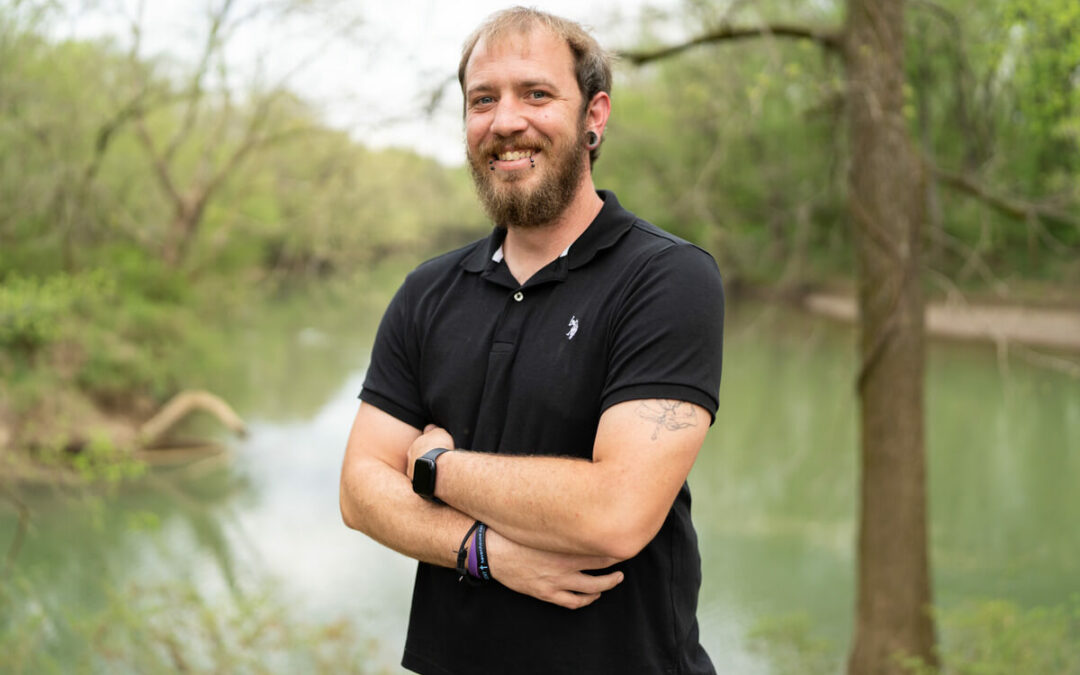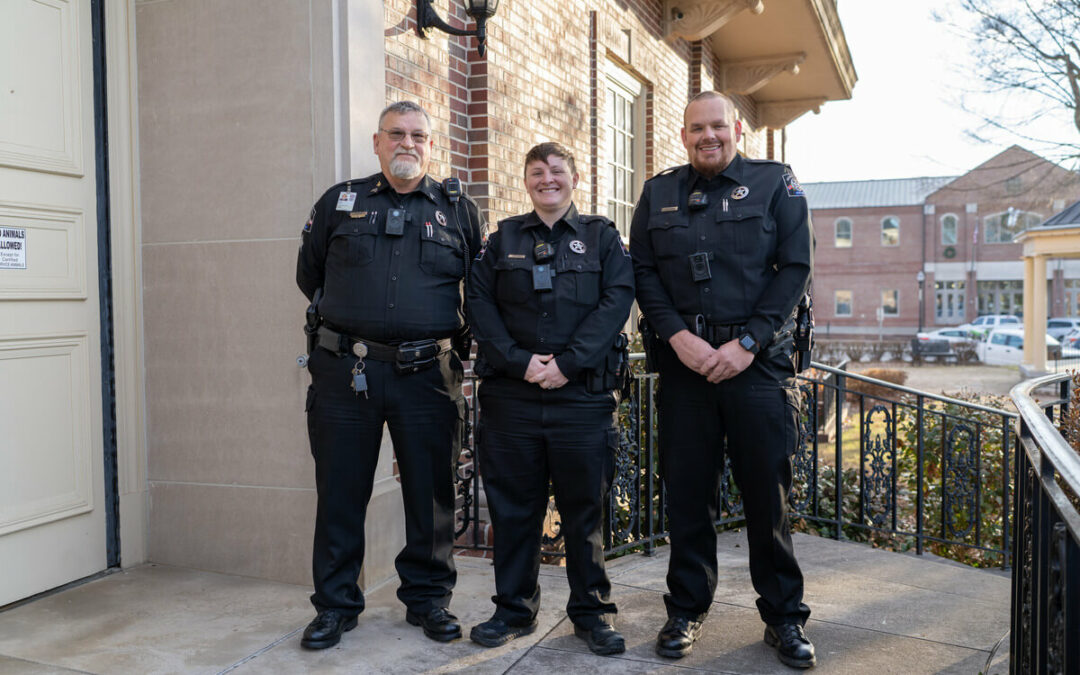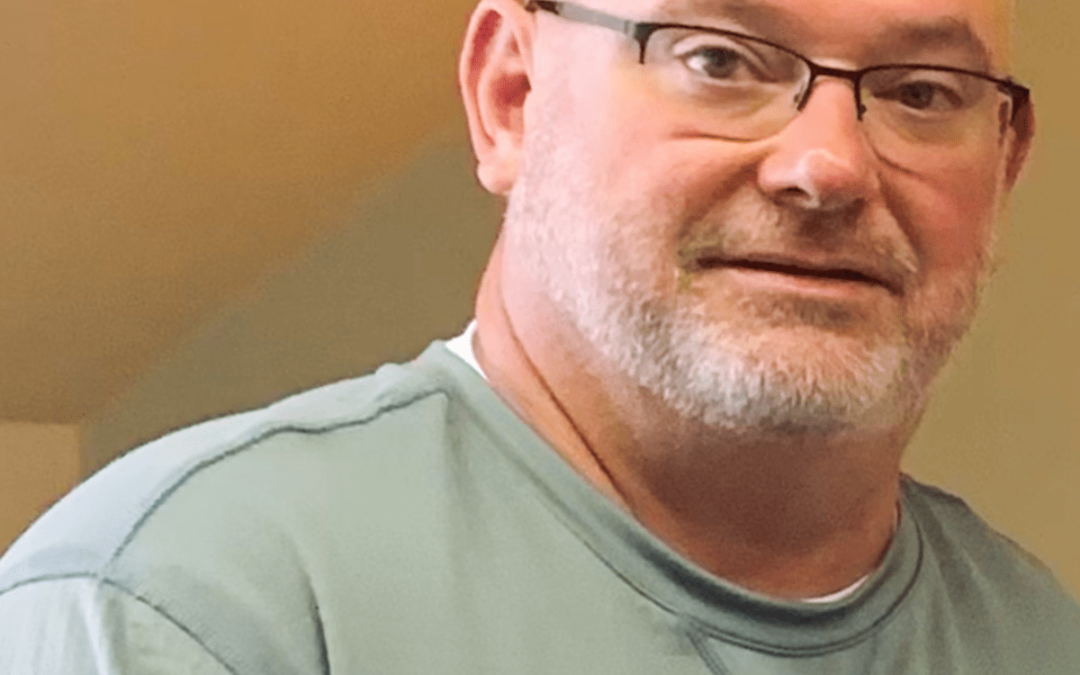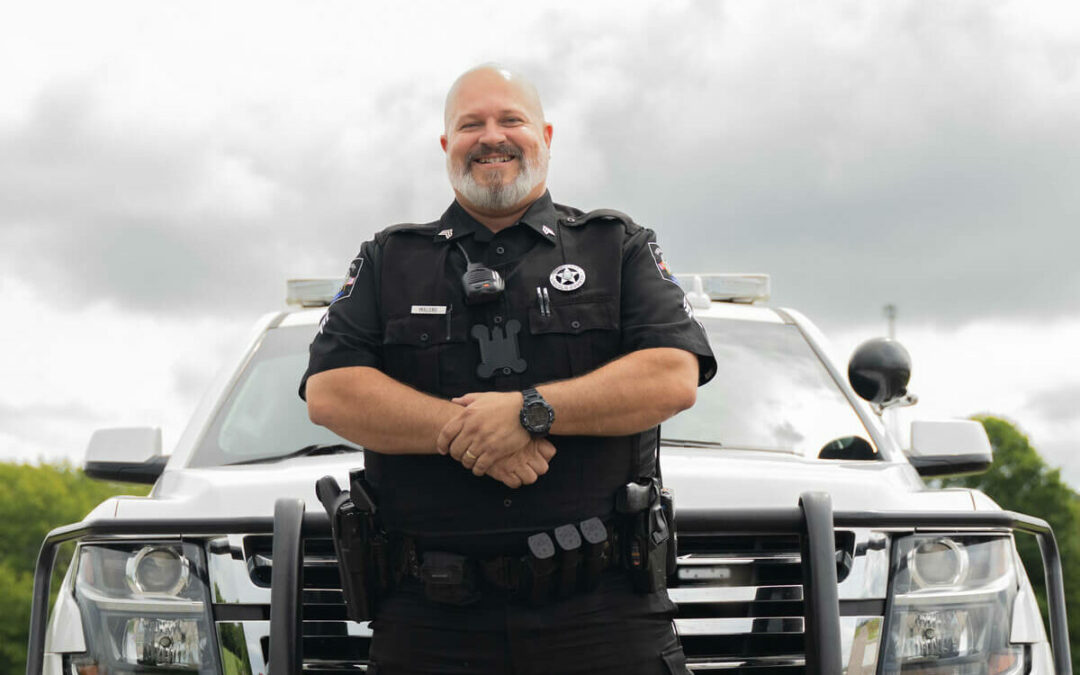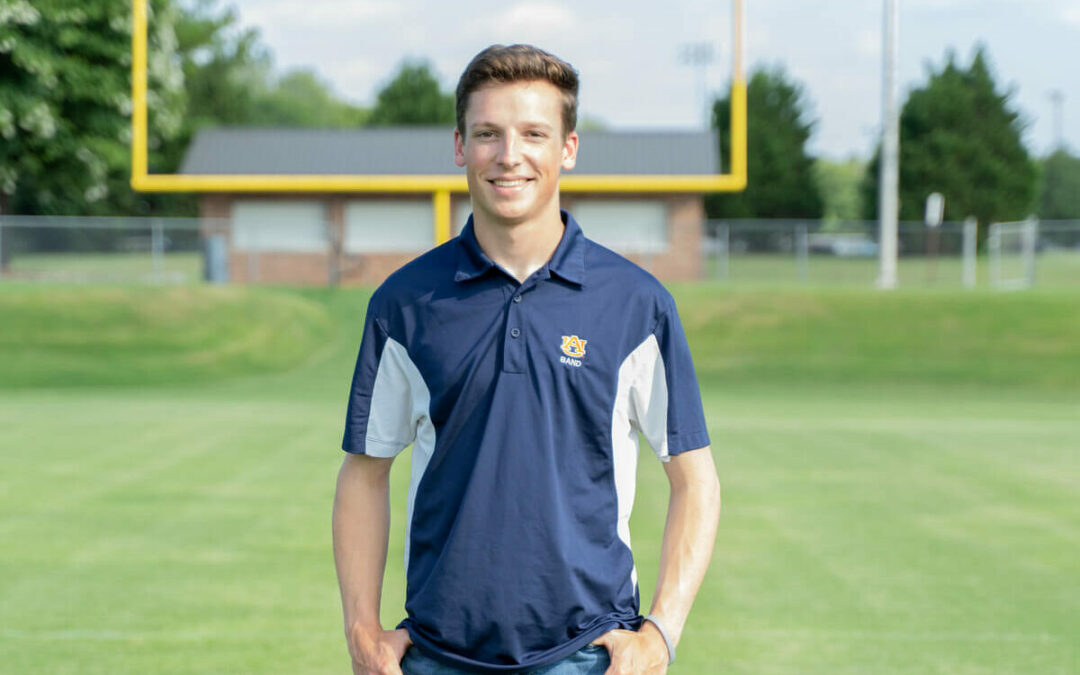
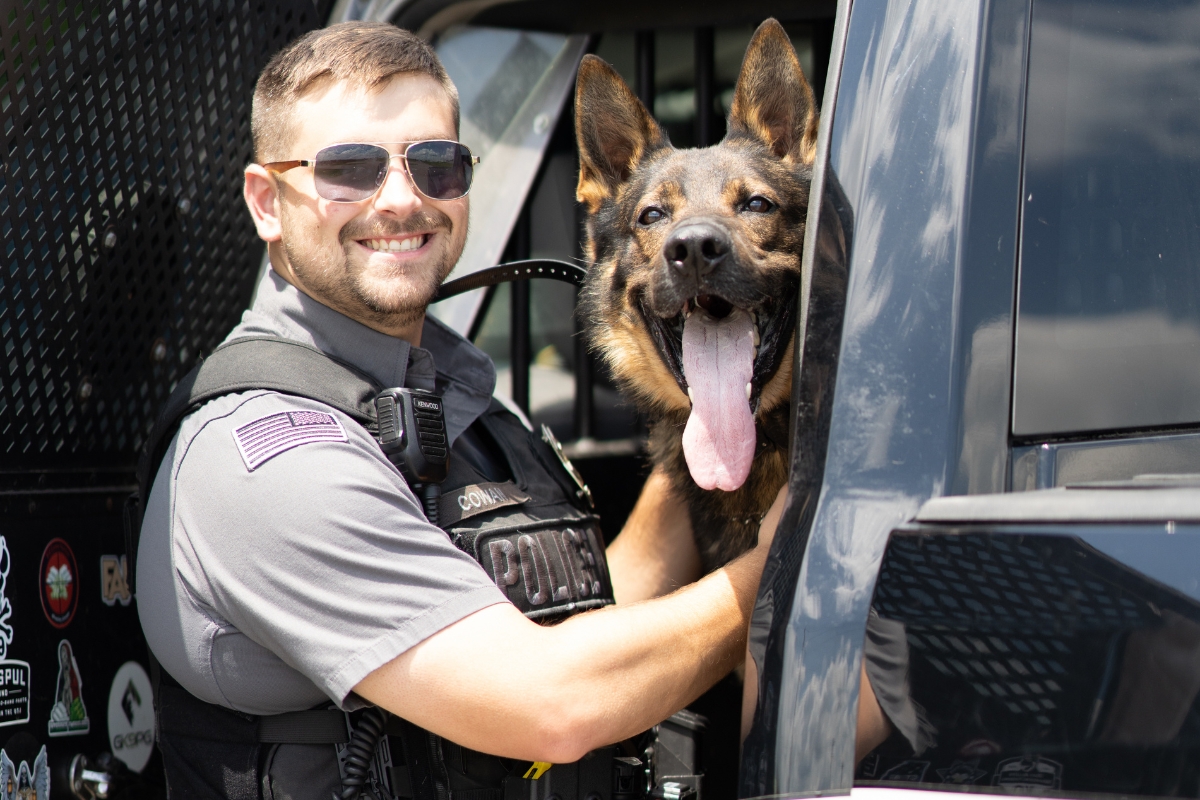
In his freshman year of high school, Officer Bailey Cowan resisted the idea of going into law enforcement, but his mother convinced him to take just one criminal justice class to try it out. He finally gave in and registered for the class during his sophomore year, and that decision shaped his future more than he anticipated. Cowan said the shift in his desire to study law enforcement was due to his criminal justice teacher, Drew Young.
“I got in his class, and he and I really connected, and the material connected, and I just got a passion for it there,” Cowan said.
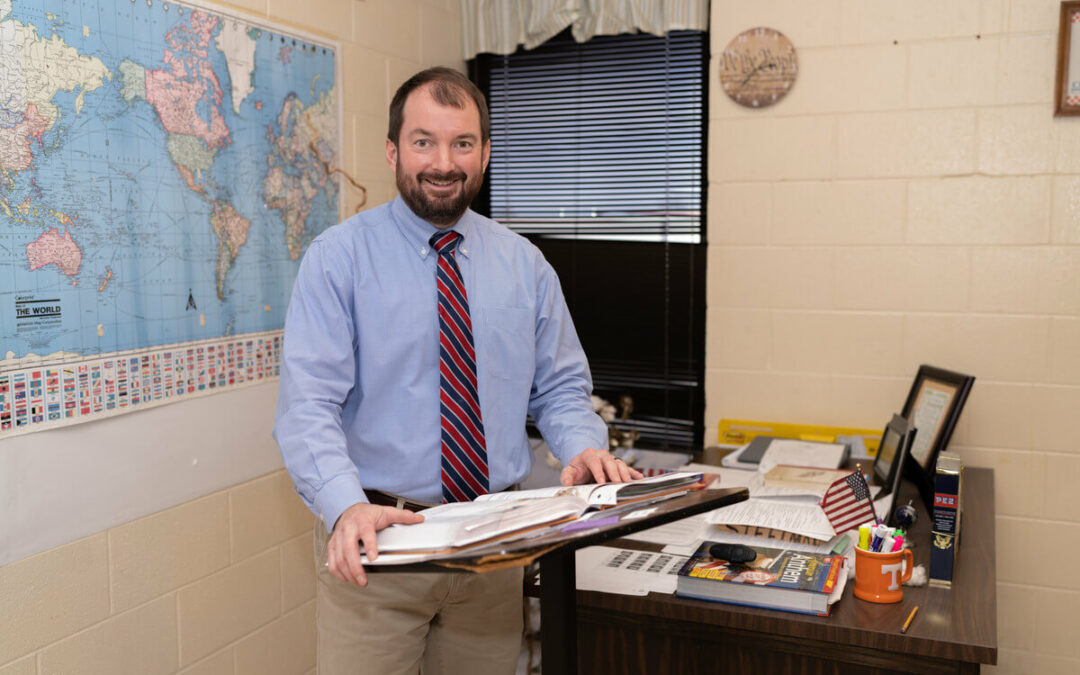
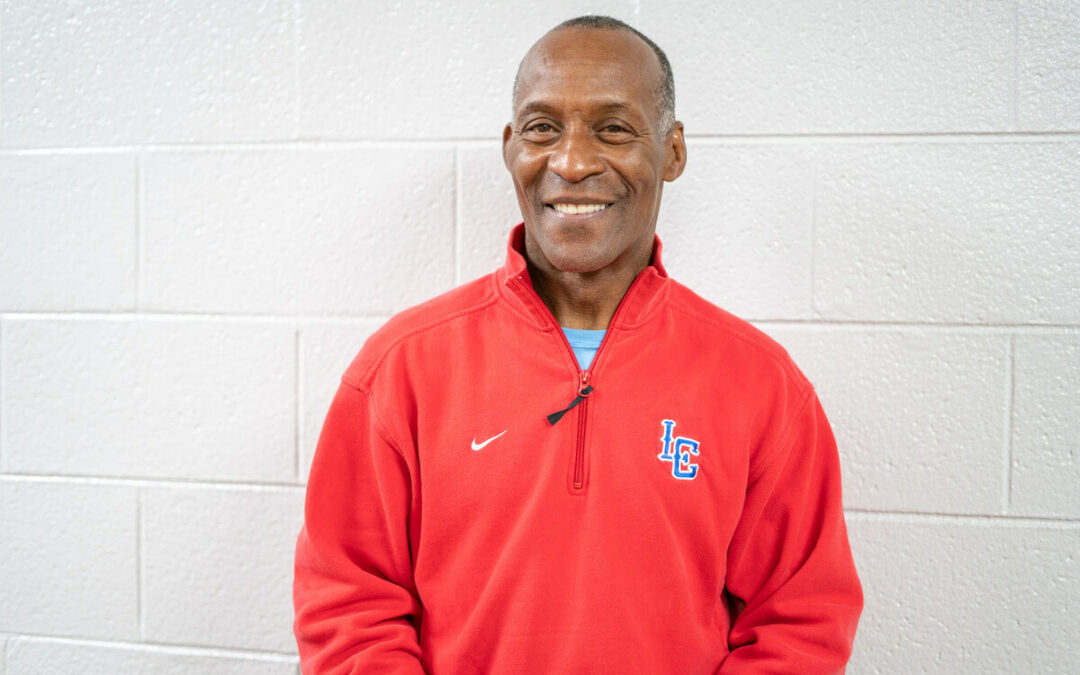
Cowan had known Young for years after growing up with Young’s son, but sitting in Young’s classroom convinced Cowan that this was the field he wanted to study. Young was an instructor at the school, but he also worked part-time at the sheriff ’s office. That personal experience made him an engaging and inspiring teacher.
“I could see how passionate he was about teaching it,” Cowan said. “The way he cared about his students, and the way he just showed us what the police world was like, I thought, ‘Man, that’s what I want to do.’”
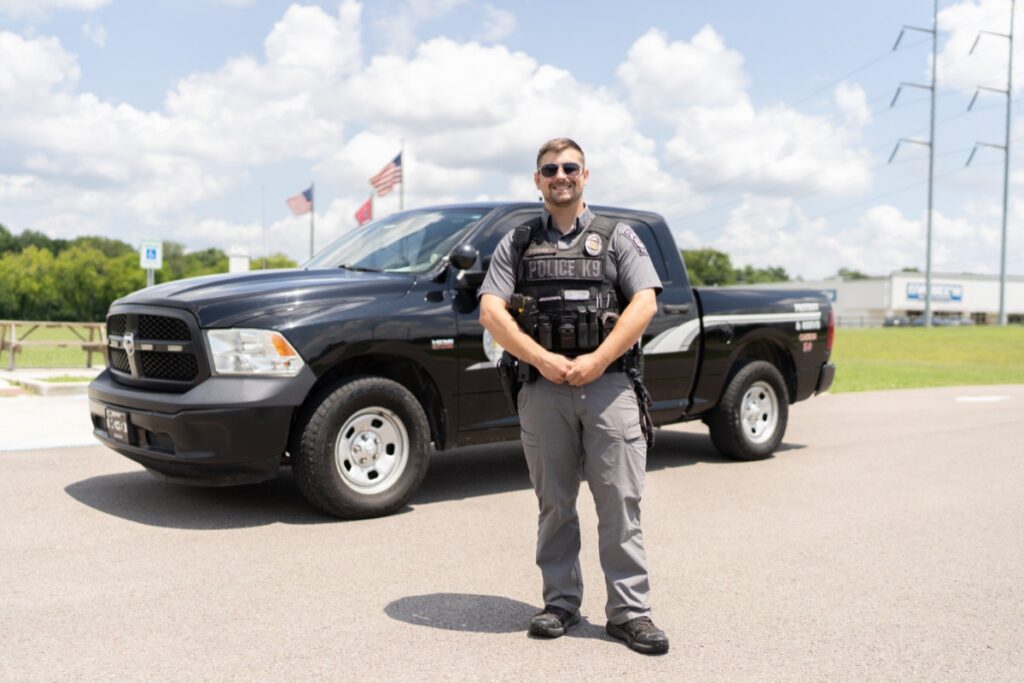
Cowan took the class during his sophomore, junior, and senior years, eventually serving as a teacher’s aide to help Young introduce younger students to criminal justice.
After graduation, his path took a detour. He initially enrolled in a technical school out of town but quickly realized it was not a good fit. What he really wanted was back in Fayetteville.
Cowan came back home and joined the Lincoln County Sheriff’s Department, spending two years as a corrections officer before moving to patrol. The experience of working in the jail had a major impact on him. A supervisor named Robbie Brooks, who has since passed away, pulled him aside during a frustrating and difficult time on the job. The advice she gave him that day made all the difference for him at the jail and has stuck with him through every other position he has held in the department.
“She told me, ‘Treat people the way they need to be treated. Whether they’ve done good or bad, if you still treat them like people, you’ll have a much easier time doing this job,” Cowan said. “That just kind of clicked for me.”
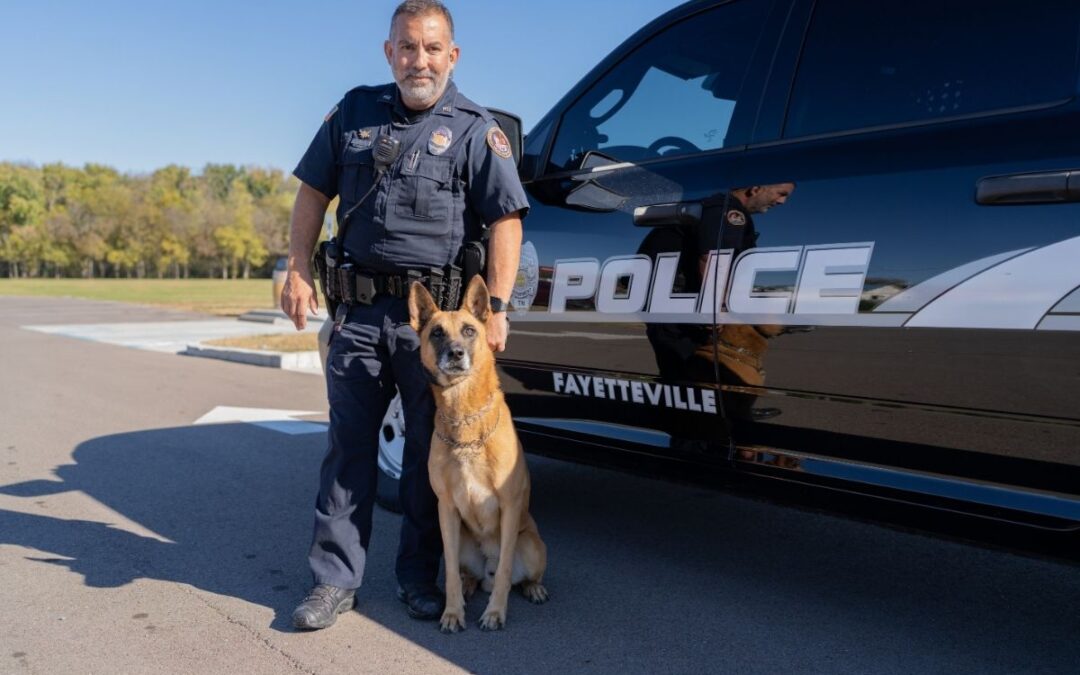
About two and a half years after he joined the Fayetteville Police Department as a patrol officer, Cowan began working alongside K-9 handler Andy Rodriguez, who was working closely with a new dog named Bosco. Cowan began asking questions about the K-9 unit, and Rodriguez invited him to join him in the training sessions.
“He was like, ‘My truck leaves my driveway at 6 o’clock. If you want to be there, you’d better be there,” Cowan said. “And I think for six months straight, I was in his driveway at 6 o’clock every morning.”
Cowan did this voluntarily, soaking up all the information, learning the procedures, and participating in the training drills. Because of his dedication, he was able to log many training hours. The trainers at Madison County did not hold back because they needed to fully prepare officers for this special level of service. Cowan says they pointed out to him that this field of work was demanding and that he needed to get in shape if he was going to keep up with the dogs. He took the advice seriously, adjusting his diet and running more consistently until he had lost 90 pounds.
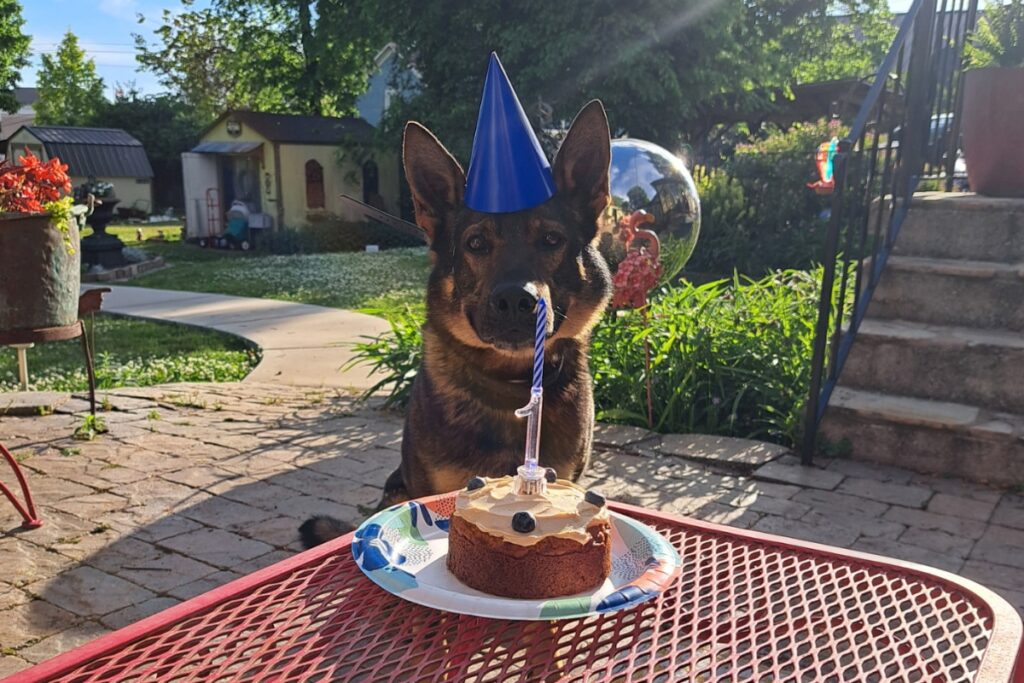
When a K-9 position opened up, Cowan eagerly applied, and Rodriguez gave him Bosco, a 3-year-old German shepherd who had already been through the program. Cowan found himself trying to keep up with a dog who already knew the job.
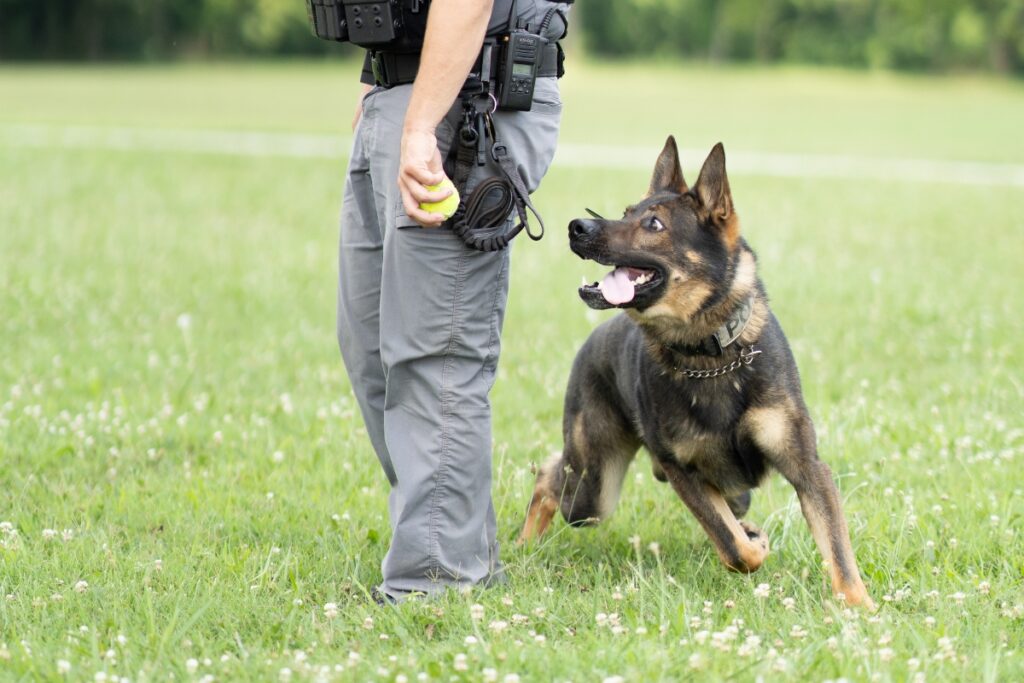
“He was on one page of the book, and I was still trying to figure out how to open it,” he said. “It’s crazy now to look back to where we were and to the struggles we had, when now we really just click together.”
Bosco is a dual-purpose dog, trained in both drug and narcotics detection and apprehension work. Cowan and Bosco have assisted with warrant service, tracking, missing-person searches, and school sweeps. Their bond is a special one, and when Bosco eventually retires from service, Cowan will take him home for good.
The pair holds a national certification that would allow them to work anywhere in the country, but Cowan doesn’t intend to leave the home he loves.
“I grew up in this community. I care about it,” he said. “I want anybody in our community to feel like they can come up and talk to me at any time.” GN